
Jewish Wedding Photography in South Florida: Capturing Tradition, Emotion, and Celebration
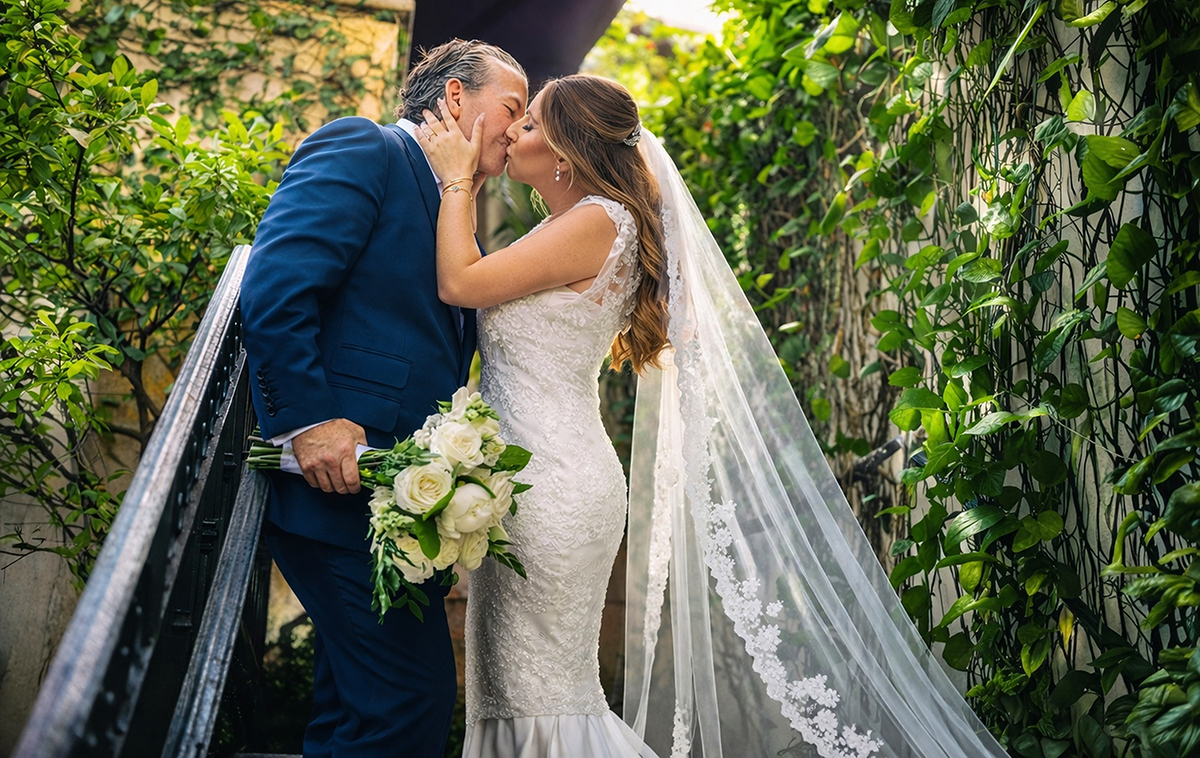
A romantic רגע (moment) captured at Casa Tua Hotel in Miami Beach—perfect for an intimate Jewish wedding celebration.
(ABOVE) Tucked away in the heart of Miami Beach, Casa Tua Hotel offers an intimate and effortlessly romantic setting that is perfect for a Jewish wedding. This image captures a quiet, emotional moment between bride and groom, framed by lush greenery and soft natural light that enhances the elegance of the scene. The venue’s European-style charm, combined with its exceptional cuisine and secluded garden ambiance, creates a refined yet warm atmosphere—ideal for smaller, meaningful celebrations. Whether you’re planning a wedding steeped in tradition or simply looking for a memorable dining experience, Casa Tua delivers a level of sophistication and intimacy that is hard to match in South Florida.
What Makes Jewish Wedding Photography So Unique?
Jewish wedding photography is unlike any other style of wedding photography—especially in South Florida, where the Jewish community is both vibrant and deeply rooted in tradition. From Fort Lauderdale to Boca Raton and Delray Beach, Jewish weddings are filled with meaningful rituals, emotional moments, and high-energy celebrations that create incredible opportunities for storytelling through images.
As a photographer who has covered a wide range of weddings—including Indian, Catholic, and Greek ceremonies—I can confidently say that Jewish wedding photography consistently delivers some of the most dynamic and emotionally rich imagery. The reason is simple: there is always something happening.
Jewish weddings are layered. They move between quiet, intimate moments and loud, joyful celebration. This natural contrast allows for a complete visual narrative—one that captures not just how the wedding looked, but how it felt.
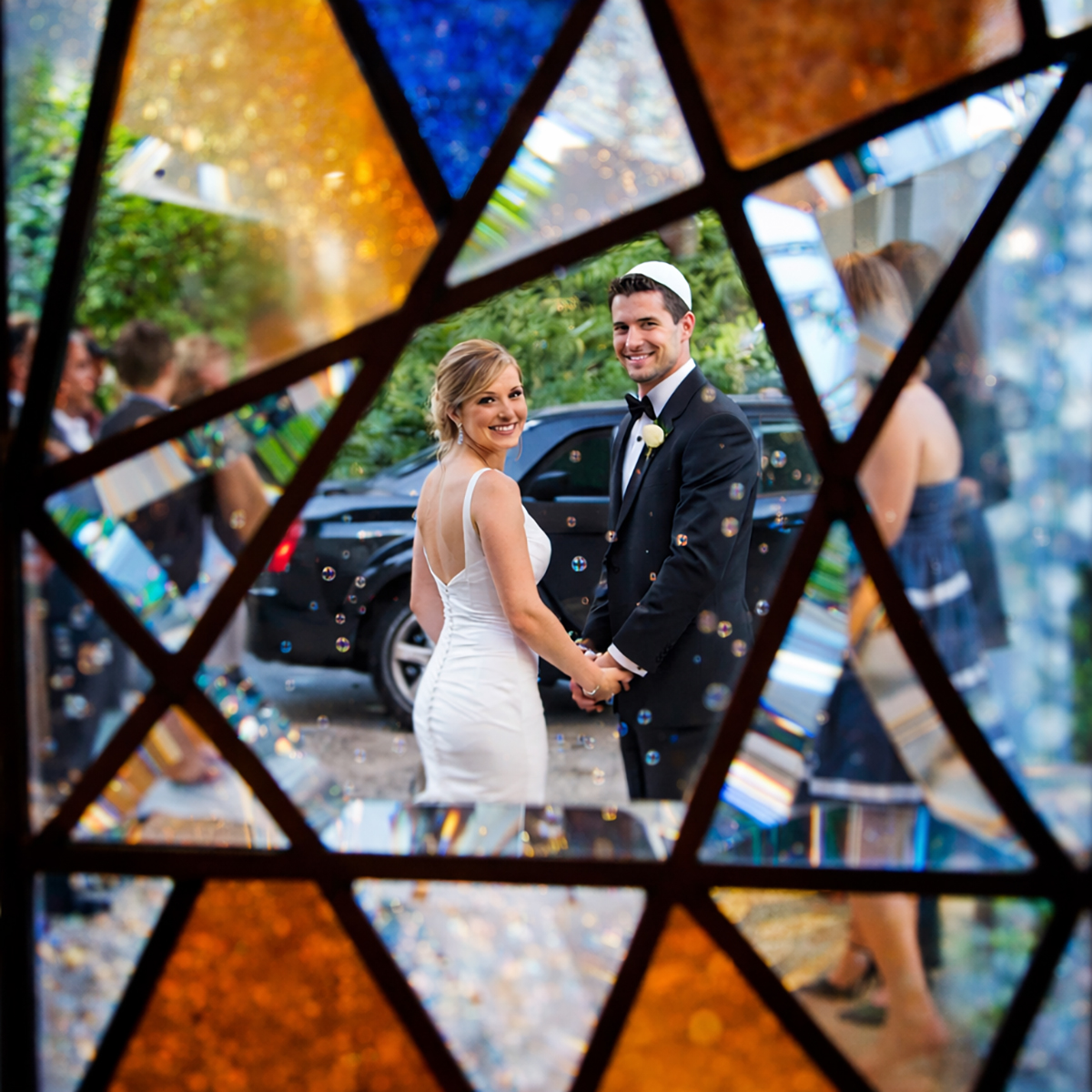
Framed through the stained glass Star of David, this moment captures the bride and groom leaving the ceremony—where creativity and storytelling come together in a single, unforgettable image.
👉 Planning a Jewish wedding in South Florida? Reach out now to check availability and start a conversation about your date.
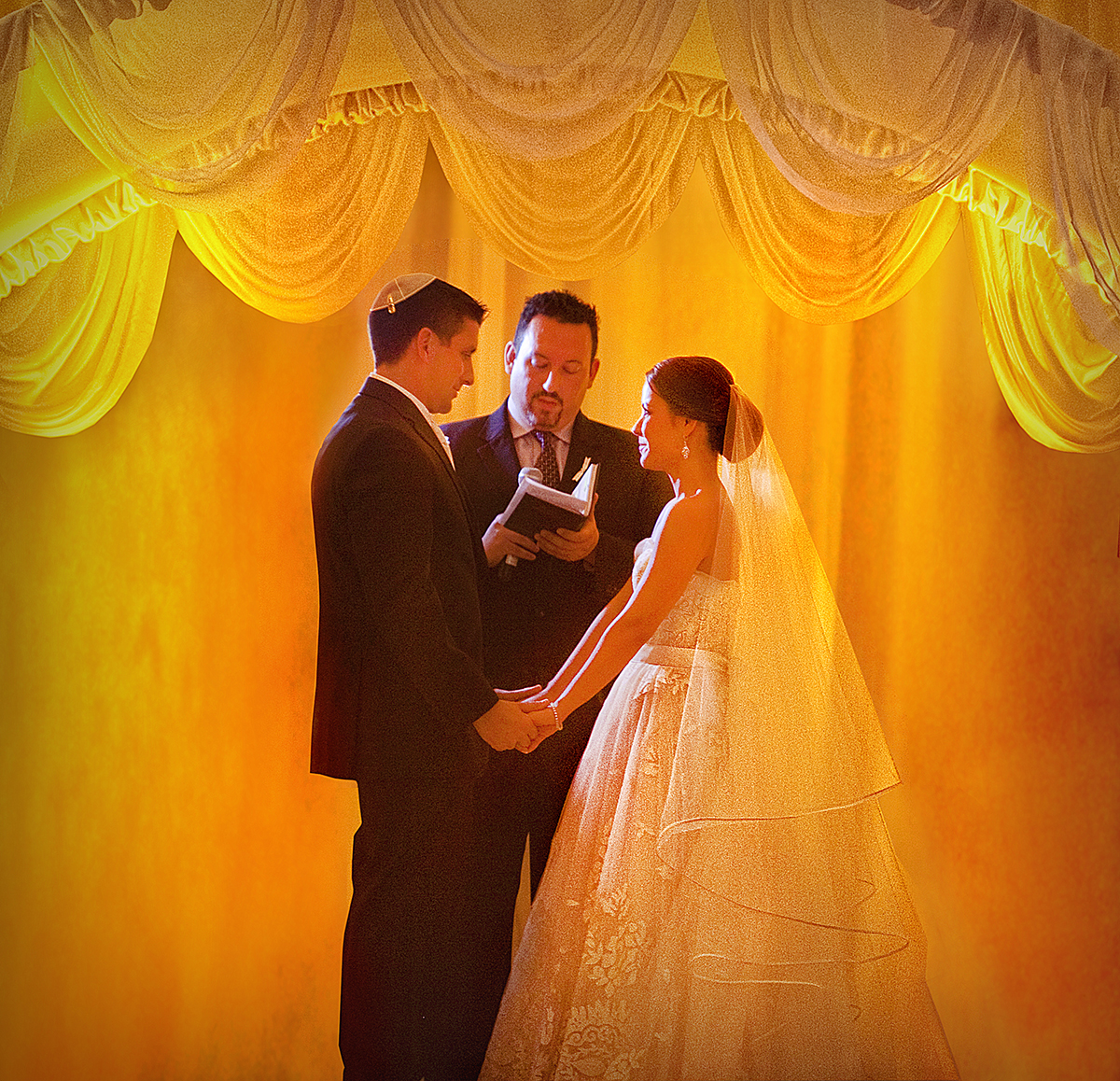
Bathed in warm golden light, this intimate moment under the chuppah captures the emotion and beauty of a Jewish wedding ceremony at The Ritz-Carlton South Beach.
ABOVE- This image captures a beautifully intimate moment during a Jewish wedding ceremony at The Ritz-Carlton South Beach. With the couple standing under the chuppah and surrounded by soft, golden lighting, the scene feels both romantic and timeless. I’m always paying close attention to how light shapes a moment, and here, the warm tones created a natural glow that highlights the emotion between the bride and groom. As a wedding photographer, my goal is to preserve these authentic moments as they unfold—quiet, meaningful, and full of connection—so couples can look back and feel exactly what they felt in that moment.
Understanding Judaism and Its Influence on Wedding Traditions
To photograph a Jewish wedding effectively, it’s important to understand Judaism and how it shapes the wedding day.
Judaism is one of the oldest religions in the world, and its traditions are deeply embedded in the structure of marriage ceremonies. A Jewish wedding is not just a celebration—it is a sacred covenant, rich with symbolism and meaning.
In South Florida, you’ll encounter a wide spectrum of observance—from Orthodox to Conservative to Reform weddings. Each will have variations, but the foundational elements remain consistent.
These include:
- The Ketubah (marriage contract)
- The Chuppah (symbolic home)
- The Sheva Brachot (seven blessings)
- The breaking of the glass
- The Hora dance
Deep Roots in the Jewish Community: Photographing Temple Leadership
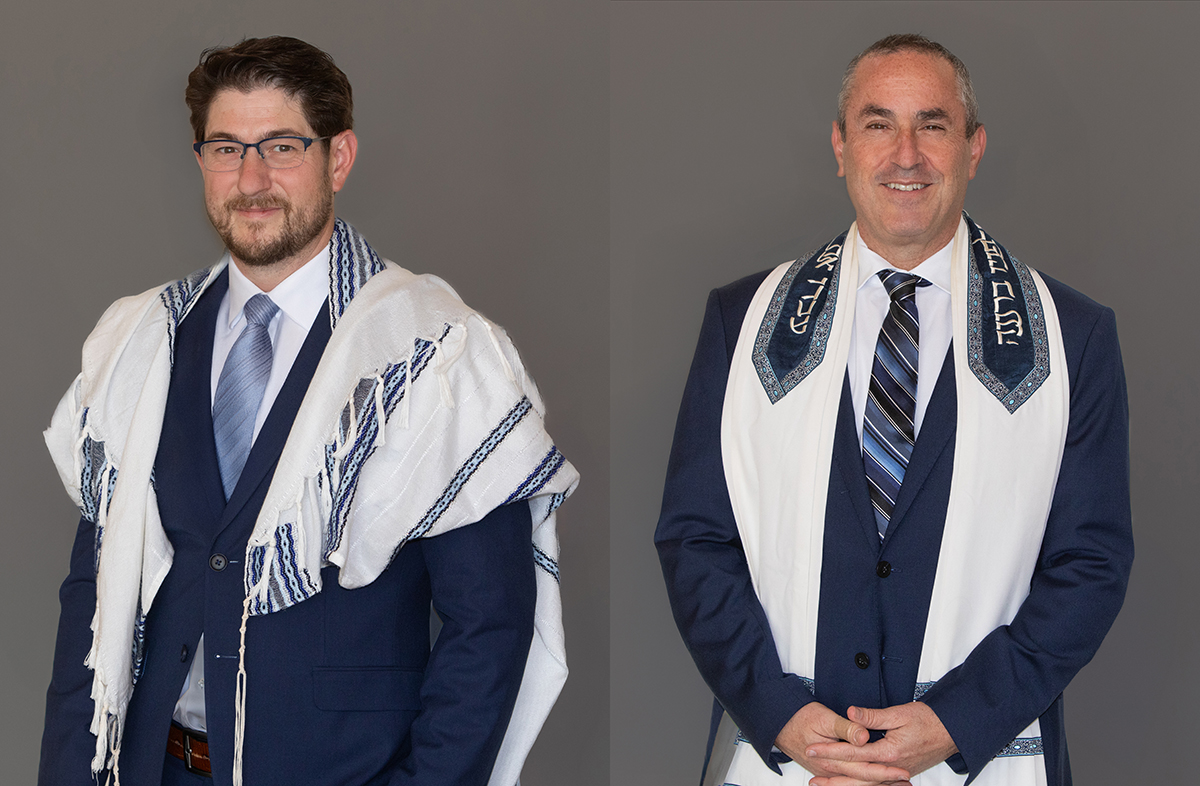
Rabbi Kapitulnikand & Rabbi Yaron Kapitulnik Senior Rabbi of Temple Judea, captured in a timeless portrait that reflects his leadership and deep connection to the congregation.
One of the things that truly sets my work apart as a South Florida Jewish wedding photographer is not just my experience with weddings—but my deep familiarity with Jewish life, traditions, and the people who lead and shape the community.
Over the years, I’ve photographed a wide range of Jewish events, including bar mitzvahs, bat mitzvahs, weddings, and various religious services. Through that experience, I’ve developed a strong understanding of the customs, structure, and rhythm of what takes place inside a temple or synagogue. That knowledge allows me to anticipate moments, respect boundaries, and work seamlessly in environments where awareness and discretion matter.
A perfect example of this connection is my relationship with Temple Judea in Jupiter, Florida—one of the most vibrant and respected congregations in the area. Having worked there on multiple occasions, I’ve built a level of trust with both staff and leadership that goes beyond a typical vendor relationship. In fact, that trust led to an opportunity that speaks volumes: I was asked by the temple staff to photograph professional headshots of their clergy.
The two portraits shown here are Rabbi Josh Franklin (left) and Rabbi Yaron Kapitulnik (right), both of whom play significant roles in shaping the spiritual life of their congregation.
Rabbi Josh Franklin, who will be joining Temple Judea as Co-Senior Rabbi beginning July 1, 2026, brings with him fifteen years of distinguished rabbinic experience. Most recently serving as Senior Rabbi of the Jewish Center of the Hamptons, he built a thriving, inclusive community known for innovation and creativity—something I deeply relate to as a photographer. His approach to Jewish life, including programs like “Shabbat on the Beach,” reflects a modern, engaging perspective that resonates strongly with today’s couples.
From a visual standpoint, his portrait reflects that balance—professional, approachable, and grounded in tradition. The tallit, carefully positioned, frames him in a way that feels both respectful and contemporary, much like the weddings I photograph where tradition and personal expression come together.
Rabbi Yaron Kapitulnik, who has served as Senior Rabbi of Temple Judea since 2010, represents continuity, leadership, and deep-rooted connection to the congregation. His background—from Hebrew Union College to his earlier experiences in Israel—brings a richness and depth to his role that is clearly felt within the community.
When photographing Rabbi Kapitulnik, my goal was to create an image that reflects that presence: confident, warm, and centered. Just like during a wedding ceremony under the chuppah, where the rabbi plays a pivotal role, capturing that sense of leadership visually requires attention to posture, expression, and subtle detail.
What ties these portraits directly into my wedding photography is simple: understanding.
When you’ve worked with rabbis, photographed services, and spent time inside temples, you gain insight that goes far beyond what’s written in a timeline. You know when to move and when to stay still. You understand how different rabbis approach ceremonies. You recognize the flow of blessings, the importance of positioning, and the moments that cannot be missed.
This experience becomes especially valuable during a Jewish wedding ceremony. Every rabbi has a slightly different style—some are more traditional, some more modern, some more structured, others more flexible. Having already worked within that environment, and with clergy like those at Temple Judea, allows me to adapt quickly and operate with confidence.
It also builds trust—not just with the couple, but with the officiant and the venue. And in Jewish weddings, where so much of the day is rooted in tradition and meaning, that trust is everything.
For my clients, this translates into a smoother experience and stronger images. There’s no hesitation. No missed moments. No disruption to the ceremony.
Just clean, intentional, and meaningful photography that respects the tradition while still pushing creatively—exactly the balance that defines great Jewish wedding photography.
Understanding these elements allows a photographer to anticipate moments rather than react to them. That anticipation is what separates average coverage from exceptional storytelling.
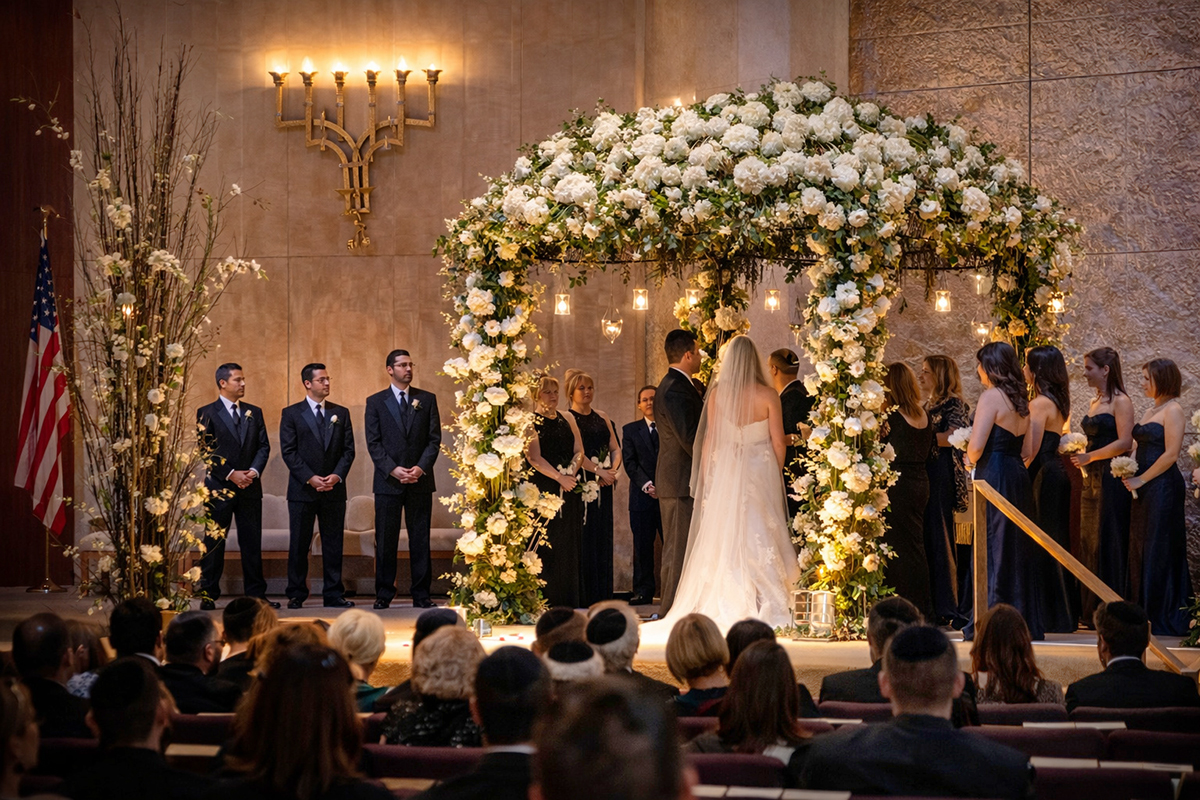
A beautifully designed chuppah takes center stage during this Jewish wedding ceremony at B’nai Torah Congregation, captured from a wide angle to showcase both the couple and the full atmosphere of the moment.
Whenever I photograph a wedding—whether it’s a Jewish wedding, Catholic wedding, or Greek wedding—I always make it a priority to capture the ceremony from multiple angles so I can fully tell the story of what’s happening. With a chuppah this beautiful, I knew I didn’t want just one perspective. I worked to photograph it from a variety of viewpoints, and for this image, I chose a wider angle to showcase not only the bride and groom, but the entire scene—the lighting, the floral design, the bridal party, and the energy in the room. This was taken at one of my favorite temples, B’nai Torah Congregation, the same location where I created that stained glass image of the bride and groom. What I love about photographing here is the opportunity to blend architecture, design, and emotion into one frame, creating images that feel both timeless and visually impactful.
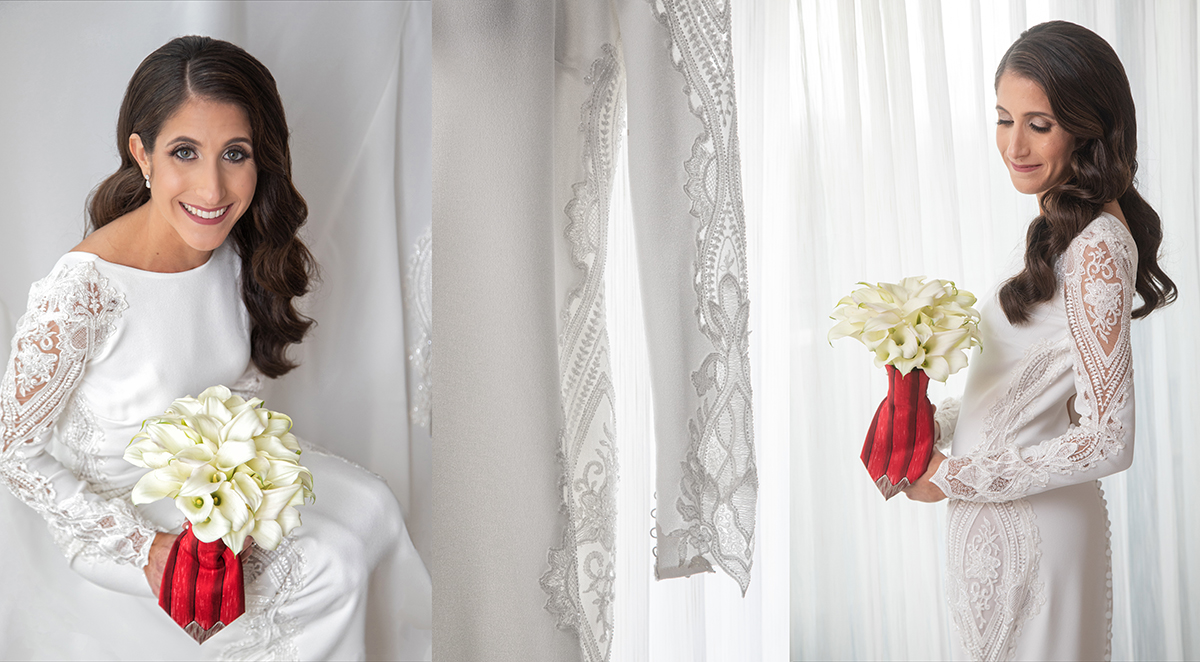
Elegant and timeless, long lace sleeves reflect the beauty of modesty in an Orthodox Jewish wedding, blending tradition with sophisticated bridal style.
At an Orthodox Jewish wedding, it’s very common to see brides wearing gowns with long sleeves, and this comes from the religious concept of tzniut, or modesty. In Orthodox tradition, modest dress includes covering the shoulders and arms, along with maintaining a higher neckline and appropriate length. The wedding ceremony, especially under the chuppah, is considered a deeply spiritual and sacred moment, and the way the bride dresses reflects that sense of holiness and respect. Rather than limiting style, these guidelines often inspire incredibly elegant and timeless designs—like the lace sleeves seen here—that photograph beautifully while honoring tradition.
👉 If your wedding includes traditional Jewish elements, working with someone who understands them can make a significant difference. Let’s discuss your plans.

From the breaking of the glass to the brilliance of the rings—this is where tradition meets creativity in Jewish wedding Photography.
One of the things I love most about Jewish wedding Photography is the incredible symbolism built into every moment of the day—and the creative opportunities that come with it. This image is a perfect example of how I approach a wedding with a photographer’s mindset that’s always searching for something different, something meaningful, and something visually compelling. After the ceremony, I noticed the broken glass sitting quietly under the chuppah, still wrapped in a napkin. Having grown up in a photography family, where we would sit together and study images during slideshow nights, I was trained early on to look deeper—to find what others might overlook. So I carefully opened the napkin, examined the glass, and immediately saw the connection: the brilliance of a diamond ring mirrored in the jagged beauty of the broken glass. With a steady hand (and trying not to cut myself), I positioned the bride and groom’s rings on the remaining stem of the shattered glass, creating a composition that blends tradition with artistry. This is what Jewish wedding Photography is all about for me—honoring the ritual while pushing creatively to produce something unique, eye-catching, and memorable. Sometimes the glass is gone before I get the chance, or replaced with a lightbulb, but when the opportunity presents itself, I take it—because images like this tell a deeper story.
I actually have two website. One is a gallery filled with some very cool and unique pictures from Jewish weddings. Check out some of the links below!
A candle light ketubah signing at a Jewish Orthodox wedding.
One of my favorite bridal portrait taken at Mondrian South Beach. This picture was taken at The Mondrian Hotel in South Beach. I love the fact that the area behind the hotel faces west, which means it is perfect for beautiful sunset and backlit evening photos like this one. The Mondrian South Beach is a stunning waterfront hotel set along Biscayne Bay, known for its sleek, modern design and breathtaking views of the Miami skyline. With airy, design-forward suites by Marcel Wanders, a vibrant bayfront pool, and the iconic Baia Beach Club, the property blends luxury with a relaxed, tropical atmosphere—making it an exceptional setting for upscale events, including elegant Jewish Orthodox weddings. Here is another from the same wedding.
Check out this photo taken in Boynton Beach at Mizner country club. I love photographing Jewish wedding ceremonies and this shot is a great example of why I enjoy capturing special moments, such as this. In this photo, the groom hands, the bride the ketubah during the service. When you look at this photo look at his hand gestures, he’s handing the ketubah over and throwing his hands in the air as if to say it’s all yours, baby. It’s the small emotional details like this that make wedding photography so much fun and so rewarding.
Breaking the plate. At a Jewish orthodox wedding and many Jewish weddings. One ritual, which I really enjoy photographing is the breaking of the plate. This is when both mothers come into the prayer room. With the intention of breaking a plate. I took this picture during a Jewish wedding reception. I went into the prayer room and the broken plates were still sitting there wrapped in a napkin. I figured that this would be a great opportunity to do a unique wedding ring shot so I got the bride and groom’s wedding rings and I put them on the broken plate. Want to know more about this tradition? Read on: At some Jewish weddings—particularly in Orthodox traditions—there is a pre-wedding ritual known as the tena’im, where the mothers of the bride and groom break a plate together. This symbolic act represents the formal agreement and commitment between the families, much like an engagement becoming final. Just as a broken plate cannot be put back together, it reflects the seriousness and permanence of the couple’s commitment. It also carries deeper meaning: the transition from two separate families into a new, unified one, while reminding everyone that even in moments of great joy, Jewish tradition acknowledges past sorrow—echoing the later breaking of the glass under the chuppah.
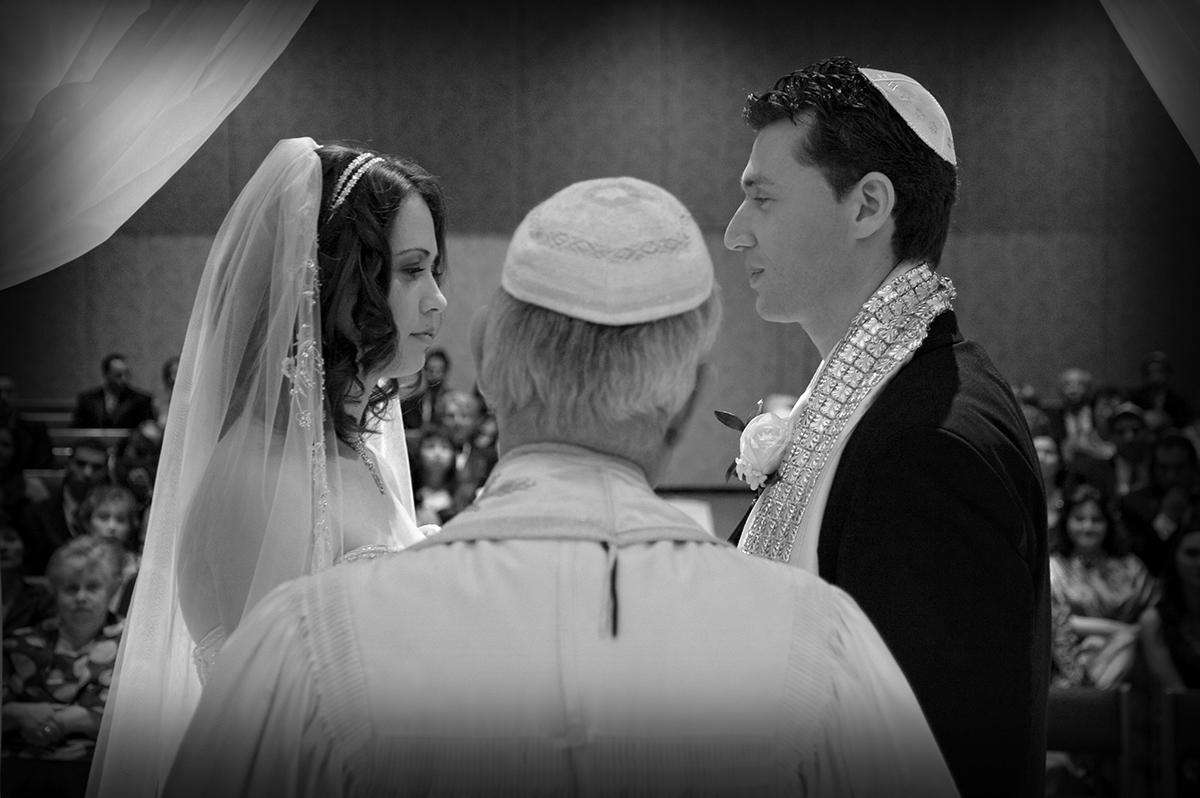
Captured discreetly from behind the chuppah, this intimate moment between bride and groom highlights the beauty of photographing a Jewish wedding ceremony without interruption or flash.
Why South Florida Is Ideal for Jewish Weddings
South Florida is one of the most popular regions in the country for Jewish weddings, and for good reason.
The area offers:
- A strong and active Jewish community
- A wide variety of venues, from luxury resorts to private clubs
- Beautiful outdoor ceremony options year-round
- Easy access for traveling guests
From beachfront ceremonies in Fort Lauderdale to upscale country club weddings in Boca Raton and Delray Beach, the diversity of settings allows couples to personalize their wedding while still honoring tradition.
For a photographer, this creates an ideal environment. You can move from a bright outdoor Chuppah ceremony to a dramatic indoor reception, capturing a full range of lighting, emotion, and energy.
👉 Getting married in South Florida? I can help you plan your timeline around lighting, location, and tradition to get the best possible images.

A creative perspective on a Jewish wedding day—groomsmen positioned across multiple floors and a modest Orthodox bridal gown—coming together to tell a deeper, more artistic story.
This set of images really represents how I think as a photographer. While photographing an Orthodox Jewish wedding at what was then the Delray Beach Marriott (now the Opal Grand Hotel), I had the idea to place each groomsman on a different floor and photograph them all from across the courtyard. It wasn’t about just documenting the moment—it was about creating something visually interesting and different. At the same time, I noticed the bride’s gown hanging in the window, with its long sleeves reflecting the modesty traditions of an Orthodox Jewish wedding. Bringing these elements together creates more than just a photograph—it tells a story. This is how I approach Jewish wedding photography: always looking for angles, layers, and meaning that go beyond the obvious. It’s not just about what’s happening—it’s about how it can be seen in a way that’s thoughtful, artistic, and completely unique.
Key Moments in Jewish Wedding Photography
The Ketubah Signing
The Ketubah signing is typically one of the first major events of the day. It takes place before the ceremony, often in a private room with close family and witnesses.
This is a quiet, intimate moment—perfect for capturing genuine emotion.
From a photography perspective, the focus should be on:
- The act of signing
- Reactions from family members
- The details of the Ketubah itself
- Close-up storytelling moments
In South Florida venues, this often takes place indoors, which provides controlled lighting and a more predictable environment.
The Bedeken
The Bedeken, or veiling ceremony, is one of the most emotional parts of a Jewish wedding.
During this moment, the groom approaches the bride and lowers the veil over her face. Family members often surround the couple, creating a tightly packed and emotionally charged environment.
This moment happens quickly and cannot be recreated.
👉 If your wedding includes a Bedeken, I coordinate closely with your planner and family to ensure I’m positioned perfectly for this moment. Reach out to learn more.
The Chuppah Ceremony
The Chuppah is the focal point of the ceremony. It represents the couple’s new home and is often beautifully designed to reflect their style.
In South Florida, many Chuppah ceremonies take place outdoors, which introduces both opportunity and challenge.
Lighting conditions can vary dramatically:
- Midday sun can be harsh
- Beach settings introduce reflections and wind
- Garden venues create mixed lighting environments
A skilled photographer knows how to adapt to these conditions while maintaining consistent exposure and color.
👉 I help couples plan ceremony timing around South Florida sunlight to ensure the best possible results. Let’s talk about your timeline.
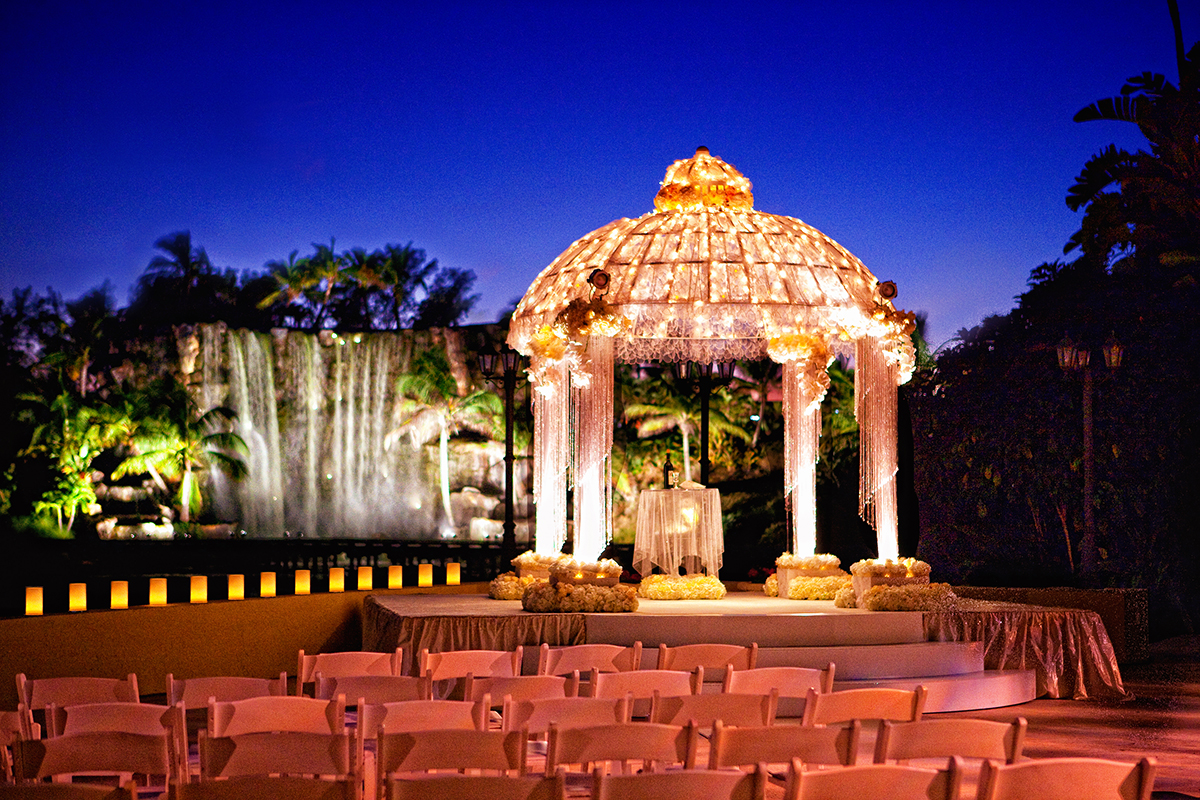
A breathtaking custom-designed chuppah glows against the night sky at JW Marriott Miami Turnberry Resort & Spa—an unforgettable setting for a truly one-of-a-kind Jewish wedding ceremony.
When it comes to Jewish weddings, the chuppah is always a focal point—but this one was on another level. Designed by the bride’s father, a high-caliber event designer, this incredible structure was created as a meaningful and unforgettable gift to his daughter. Set against the dramatic backdrop of the JW Marriott Miami Turnberry Resort & Spa, the glowing chuppah, cascading lights, and lush details transformed the ceremony space into something truly magical. Whether you spell it chuppah, huppah, or chupa, there’s no denying the beauty and symbolism it represents. As a South Florida wedding photographer, moments like this are what I love most—capturing not just the ceremony itself, but the artistry, emotion, and personal touches that make each wedding completely unique.
Circling Rituals and Blessings
During the ceremony, the bride may circle the groom multiple times, symbolizing unity and the creation of a new household.
This movement adds a dynamic element to the ceremony and creates opportunities for more creative compositions.
Photographers must stay alert and mobile, adjusting angles while remaining unobtrusive.
The Breaking of the Glass
The breaking of the glass is one of the most iconic moments in Jewish wedding photography.
It happens quickly, followed immediately by applause, cheering, and celebration.
Capturing this moment requires:
- Precise timing
- Proper positioning
- Awareness of crowd reactions
There are no second chances here.
👉 If capturing this moment perfectly matters to you, make sure you’re working with someone who knows exactly when it’s coming. Contact me to discuss your wedding day coverage.
The Hora Dance
The Hora is where the energy of the wedding truly comes alive.
Guests form circles, dance energetically, and lift the bride and groom on chairs. It’s fast, unpredictable, and filled with genuine emotion.
From a photography standpoint, this is one of the most exciting parts of the day.
You need to:
- Move quickly
- Anticipate motion
- Handle changing light conditions
- Capture both wide and tight shots
👉 If you want photos that feel as energetic as your wedding actually was, I specialize in capturing moments like the Hora in a natural, documentary style.
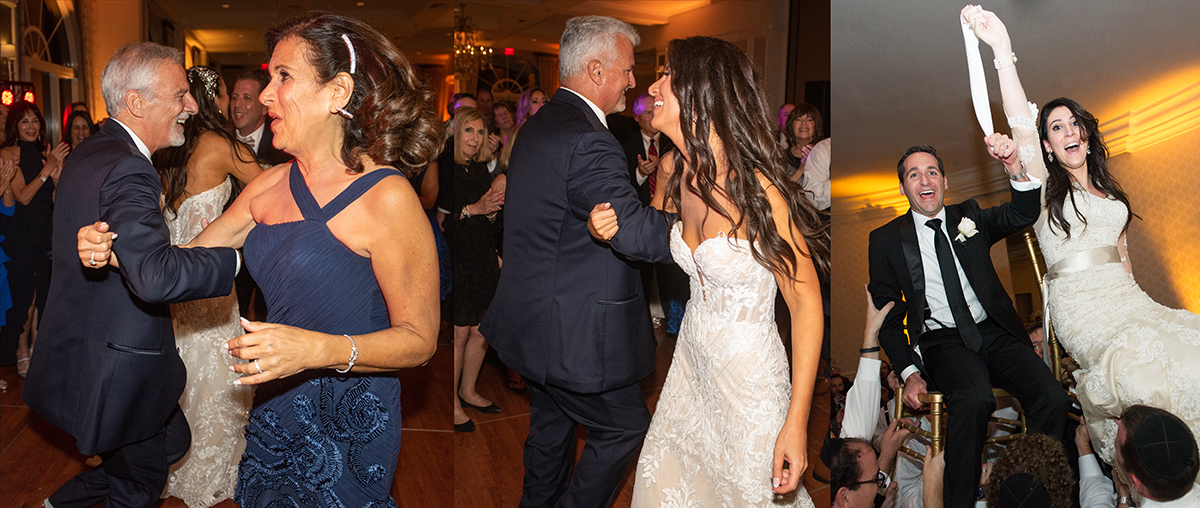
The hora in full swing—chairs in the air, circles spinning, and pure joy unfolding in every direction.
The Importance of Experience in Jewish Wedding Photography
Jewish weddings follow a specific rhythm. Without experience, it’s easy to miss key moments.
An experienced photographer understands:
- The order of events
- Where to stand during each ritual
- How to anticipate emotional reactions
- How to adapt quickly in fast-moving situations
In South Florida, where weddings often have large guest counts and tight timelines, this experience becomes even more critical.
👉 Experience isn’t just about taking good photos—it’s about not missing the moments that matter. Let’s connect and talk about your wedding.
Comparing Jewish Weddings to Other Cultural Weddings
Having photographed a wide range of weddings, I’ve seen how different traditions shape the experience.
- Indian weddings are multi-day and highly elaborate
- Catholic weddings are structured and formal
- Greek weddings are deeply symbolic
Jewish weddings combine the best of all of these elements:
- Strong tradition
- Emotional depth
- High-energy celebration
This combination creates a unique environment where every part of the day offers something visually compelling.
Lighting and Technical Considerations
Jewish wedding photography in South Florida presents a unique set of technical challenges.
These include:
- Harsh outdoor sunlight
- Dim indoor receptions
- Rapid transitions between environments
A photographer must be comfortable working in all of these conditions.
This often involves:
- Using off-camera lighting when necessary
- Adjusting settings quickly
- Maintaining consistent color and exposure
Technical skill is what ensures that your photos look polished and professional regardless of the conditions.
Storytelling Through Jewish Wedding Photography
At its core, Jewish wedding photography is about storytelling.
You’re not just capturing individual moments—you’re documenting a complete narrative:
- Preparation
- Ceremony
- Celebration
Each phase contributes to the overall story.
When done correctly, your wedding album becomes more than a collection of images. It becomes a visual representation of your relationship, your family, and your traditions within Judaism.
👉 Your wedding is a story. Make sure it’s told correctly. Reach out to discuss how I approach full-day coverage.
Building Trust Within the Jewish Community
One of the most important aspects of Jewish wedding photography—especially in South Florida—is trust.
The Jewish community is closely connected. Referrals play a major role in booking weddings.
When you consistently deliver strong work and respect traditions, word spreads quickly.
Being Jewish yourself can also create an immediate connection with couples and families. It demonstrates a level of understanding that goes beyond technical skill.
👉 Many of my weddings come through referrals. If you were referred to me, I’d love to hear more about your plans.
Why Jewish Wedding Photography Leads to Strong Referrals
In South Florida, Jewish weddings often lead to additional bookings within the same family or social circle.
You may photograph:
- One wedding
- Then a sibling’s wedding
- Then a cousin’s wedding
This creates long-term relationships and a steady flow of work.
For couples, this also means they are often hiring photographers who have already been trusted by people they know.
Creating Timeless Images
Trends in photography change constantly, but tradition does not.
Jewish wedding photography benefits from a timeless approach:
- Natural colors
- Clean composition
- Authentic emotion
Avoid overly stylized editing that may feel dated in a few years.
The goal is to create images that will still feel meaningful decades from now.
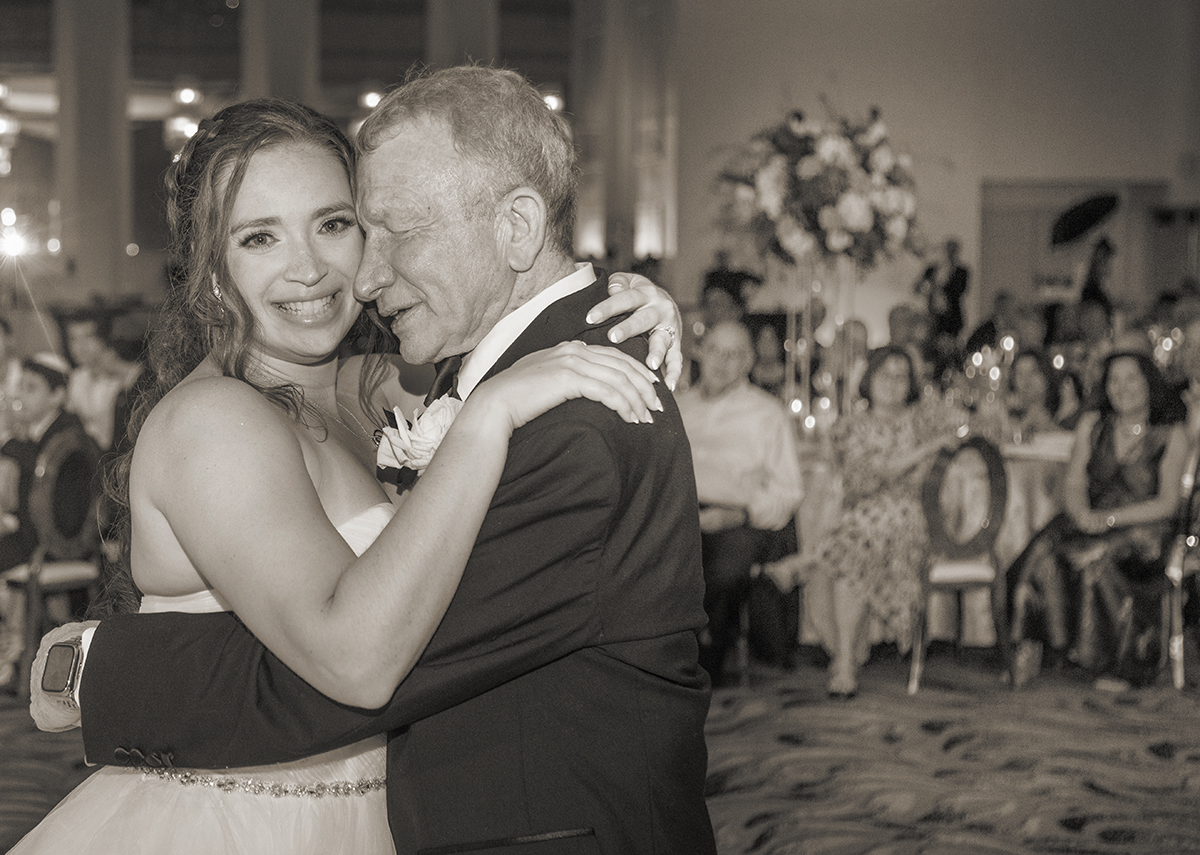
A beautiful father-daughter dance moment filled with love and emotion at Temple Beth Emet in Cooper City, Florida.
There’s something incredibly powerful about a father-daughter dance at a Jewish wedding, and this moment at Temple Beth Emet in Cooper City captures it perfectly. As a wedding photographer, I’m always watching for those genuine, unscripted interactions—the kind that can’t be staged or recreated. Here, you can feel the connection between father and daughter, a mix of pride, love, and perhaps a touch of nostalgia as he holds her close on such an important day. Surrounded by family and friends, yet completely lost in their own world, this is the kind of raw, heartfelt emotion that makes Jewish wedding photography so meaningful and unforgettable.
The Emotional Core of Jewish Weddings
Beyond the rituals and traditions, what truly defines Jewish wedding photography is emotion.
You will see:
- Parents overwhelmed with pride
- Couples experiencing genuine joy
- Guests celebrating without hesitation
These moments are real, and they are what make the images powerful.
👉 If you value real moments over staged ones, let’s talk about how I document weddings naturally and authentically.
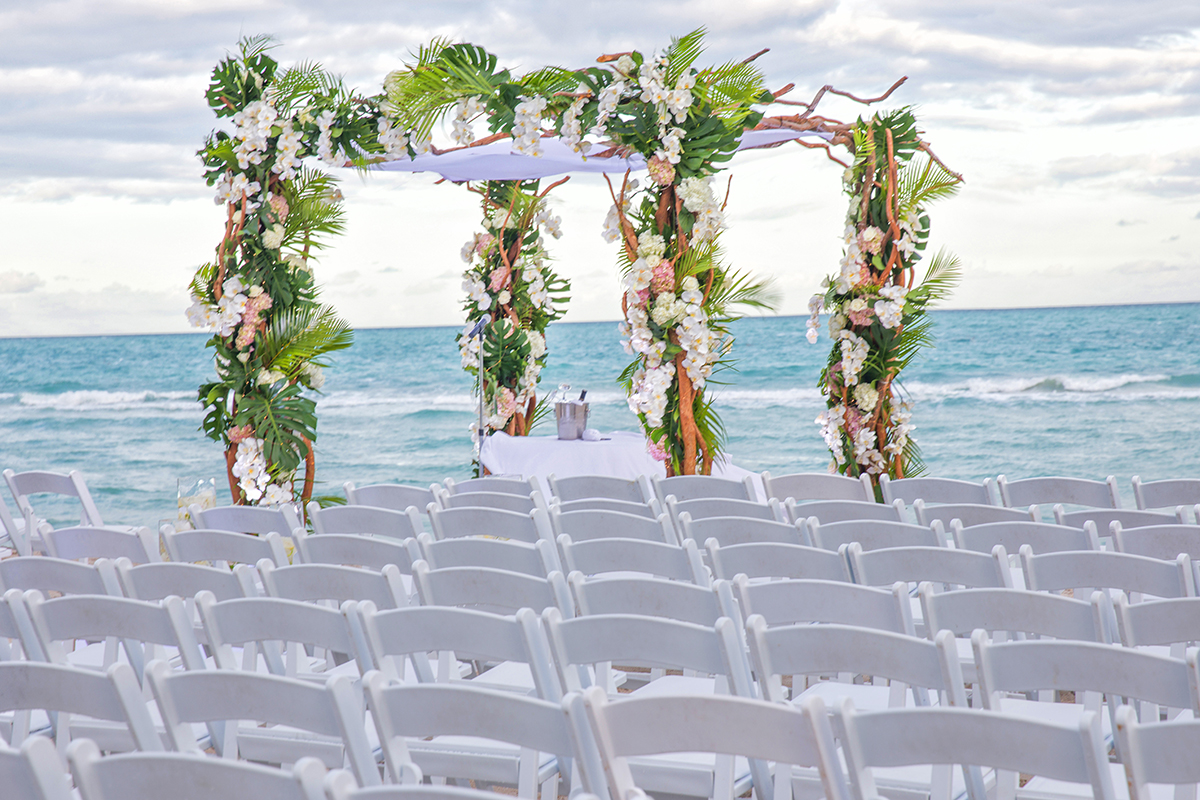
A stunning beachfront chuppah at the Fontainebleau Miami—where tradition meets the natural beauty of South Florida.
Photographing a Jewish wedding in South Florida always presents incredible visual opportunities, and this breathtaking beach chuppah at the Fontainebleau Hotel in Miami is a perfect example. Set against the natural backdrop of the ocean, this chuppah blends tradition with the relaxed elegance that makes Miami weddings so special. One of the things I love most about Jewish wedding photography is how each chuppah becomes a unique focal point—carefully designed, deeply meaningful, and visually striking. This particular setup, with its lush greenery and soft white florals, created a beautiful frame for the ceremony while complementing the coastal setting. As a South Florida Jewish wedding photographer, I’m always looking for ways to highlight both the emotional significance and the artistic details of the day, and moments like this—where tradition, design, and location come together—are exactly what make these weddings so rewarding to capture.
Final Thoughts on Jewish Wedding Photography in South Florida
Jewish wedding photography in South Florida is about more than just capturing an event. It’s about documenting a story rooted in Judaism, tradition, and celebration.
From Fort Lauderdale to Boca Raton and Delray Beach, these weddings offer:
- Emotional depth
- Cultural richness
- Incredible energy
As a photographer who has worked across many cultures and traditions, I can confidently say that Jewish weddings remain some of the most rewarding to photograph.
There is always something happening.
There is always emotion.
There is always a story.
👉 If you’re planning a Jewish wedding in South Florida and want photography that truly reflects your day, reach out now to check availability, pricing, and packages.
View comments
+ Leave a comment