
A Beautiful Catholic Wedding Ceremony Begins in South Florida
Every wedding tells a unique story, and as a South Florida Catholic Wedding Photographer, my goal is to preserve every chapter of that story—from the quiet anticipation of getting ready to the emotional ceremony, elegant portraits, and unforgettable celebration that follows. Throughout Catarina and David’s wedding day, I’ll also answer many of the questions couples ask while planning their own weddings, including when photography should begin, how church ceremonies are photographed, and why the smallest details often become some of the most treasured photographs.
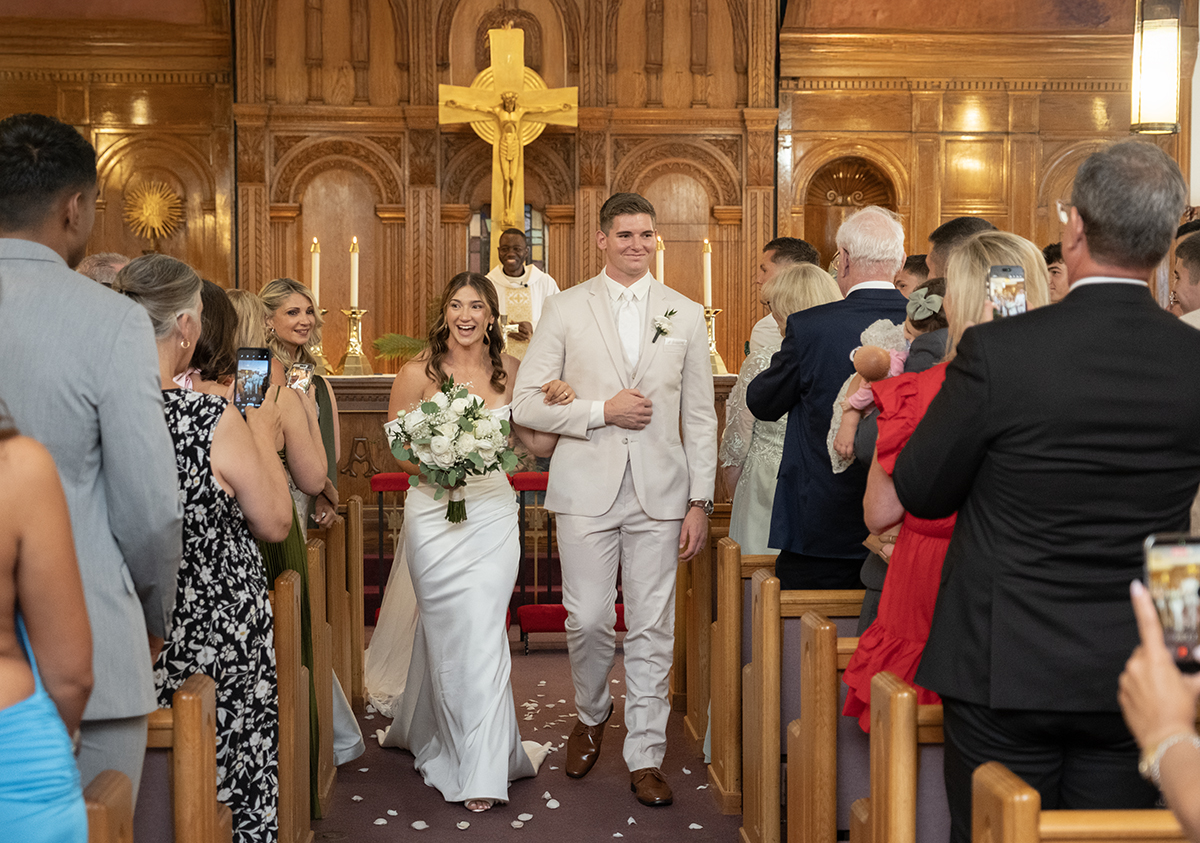
Just married! Catarina and David share their first moments as husband and wife as they walk down the aisle at Our Lady of Mercy Catholic Church. Their smiles say it all while family and friends celebrate the beginning of their new life together. Moments like these are why I love being a South Florida Catholic wedding photographer.
One of my favorite moments to photograph during any Catholic wedding is the recessional. The ceremony has concluded, the vows have been exchanged, and the bride and groom are no longer planning a wedding—they’re beginning a marriage.
As a South Florida Catholic Wedding Photographer, I’ve learned that these first few moments after the ceremony often produce some of the most authentic expressions of the entire day. Catarina’s joyful smile and David’s quiet confidence tell the story perfectly as they walk back down the aisle together while family and friends greet them with applause and congratulations.
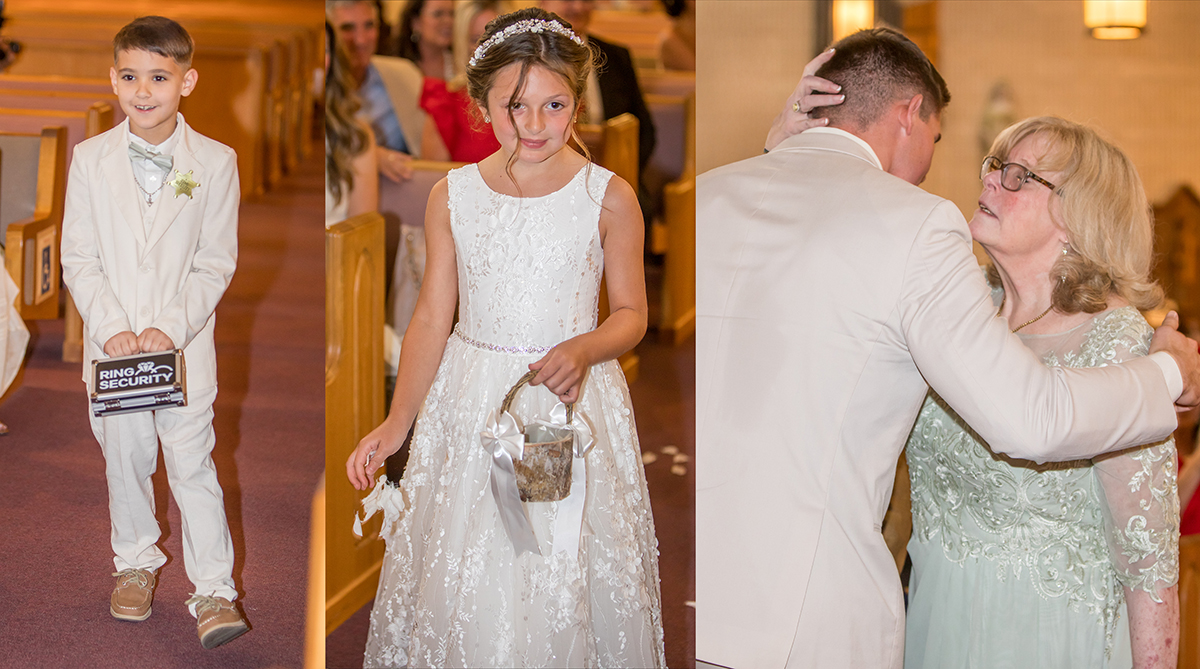
A Catholic wedding ceremony is about much more than the bride and groom—it brings together generations of family and friends who each become part of the story. The ring bearer proudly carried his “Ring Security” case down the aisle, followed by the flower girl, while an emotional moment between David and a family member reminds us that some of the most meaningful photographs happen when no one is posing for the camera.
Unlike posed portraits, moments like this can’t be recreated. They happen only once, which is why anticipating emotion is every bit as important as understanding lighting or camera settings. Capturing genuine reactions like these is one of the things I love most about photographing Catholic weddings throughout South Florida.
How Do Wedding Photographers Capture Beautiful Church Photos Without Flash?
One of the questions couples frequently ask me is, “How do you photograph a church ceremony if flash photography isn’t allowed?”
The answer is simple: preparation and experience.
Every church has its own rules regarding photography. Some churches allow flash, some prohibit it completely, and others restrict where photographers may stand during the ceremony. As a South Florida Catholic wedding photographer, I make it a priority to learn the church’s photography guidelines before the wedding day. Understanding those rules allows me to work respectfully while capturing every important moment without interrupting the ceremony.
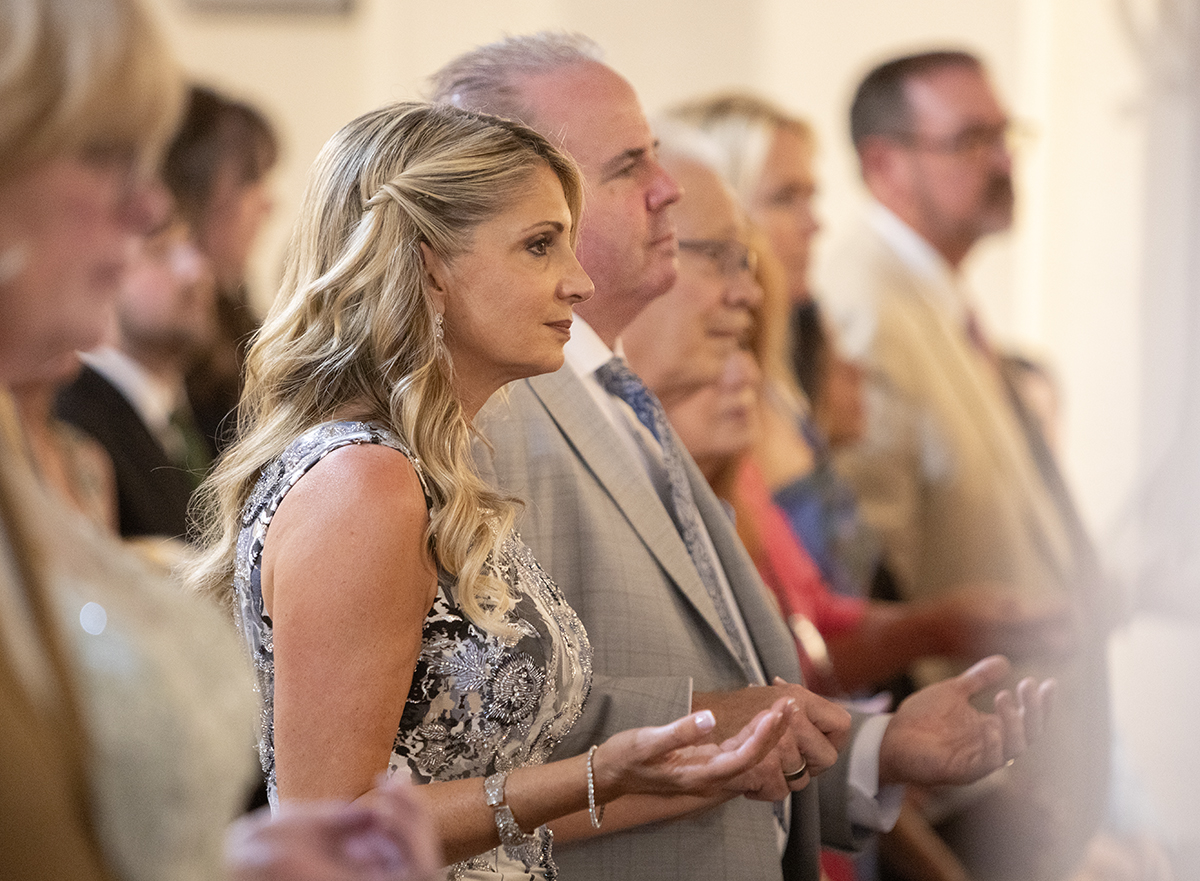
Many couples ask how photographers capture beautiful church photographs when flash isn’t permitted. The answer is preparation, experience, and the right professional equipment. This image was photographed from the back of the church using a long telephoto lens with a very wide aperture (fast lens), allowing me to work in the existing light without drawing attention to myself. Shooting with a wide aperture lets in significantly more light, making flash unnecessary in many situations, while also creating a beautifully soft background that naturally draws your eye to the bride’s mother. Because the depth of field becomes very shallow at these settings, precise focusing is essential. Every church has different photography rules, and it’s my responsibility to understand and respect them before the ceremony begins. My goal is always the same—to quietly capture genuine moments like this without ever becoming part of the ceremony.
I’ve personally witnessed priests stop a wedding ceremony because a photographer became too distracting. That’s a situation no couple wants to experience. My philosophy has always been that the ceremony belongs to the bride, groom, and their families—not the photographer. My job is to document the day while remaining as unobtrusive as possible.
Planning Your Wedding Photography: Lessons from Catarina & David’s Wedding Day
Before we continue with Catarina and David’s wedding story, I’d like to pause and answer some of the questions couples ask me most often. Throughout this article you’ll notice that I occasionally step away from the timeline of the day to explain why certain photographs were created, how they were captured, and what couples should know when planning their own wedding photography. My hope is that this blog becomes more than just a collection of beautiful images—it becomes a helpful resource for couples planning a South Florida wedding. After all, every wedding is unique, but the questions couples ask are often the same.
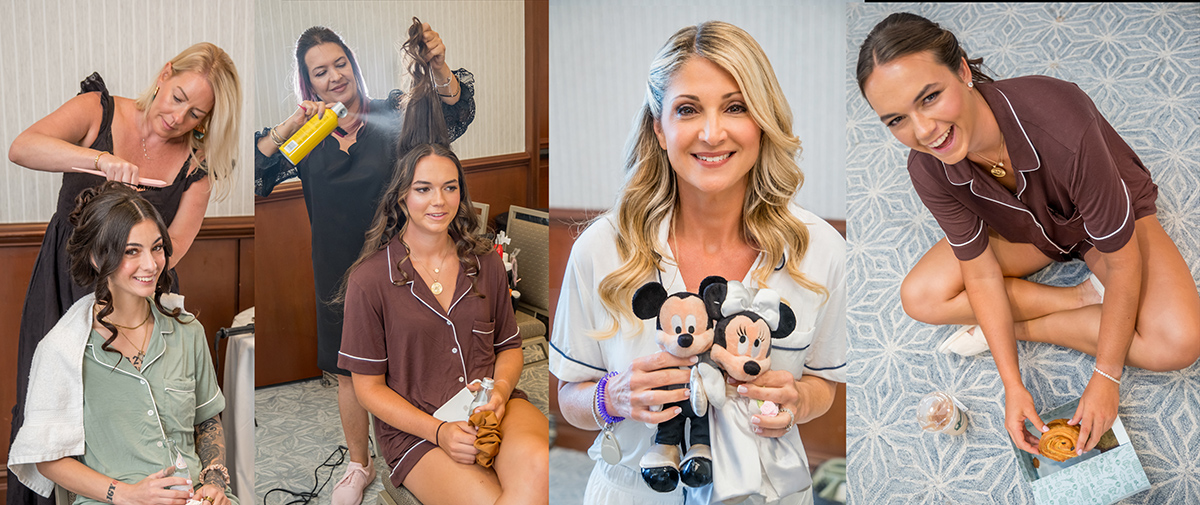
The getting-ready portion of a wedding day is about so much more than hair and makeup. It’s a time filled with family, friendship, laughter, and personal details that help tell the complete story. From the finishing touches to a proud mom holding Mickey and Minnie dressed for the occasion, these are the little moments that make every wedding unique.
Starting the Day at The Boca Raton
Like many South Florida weddings, Catarina and David chose to begin their day at one of the area’s most beautiful luxury resorts. The spacious bridal suite provided wonderful natural light for getting-ready photographs, while the elegant architecture throughout the property created beautiful backgrounds for portraits before the ceremony.
Since Catarina and David decided not to see each other before the ceremony, we carefully coordinated the morning so they could each enjoy getting ready without accidentally crossing paths.
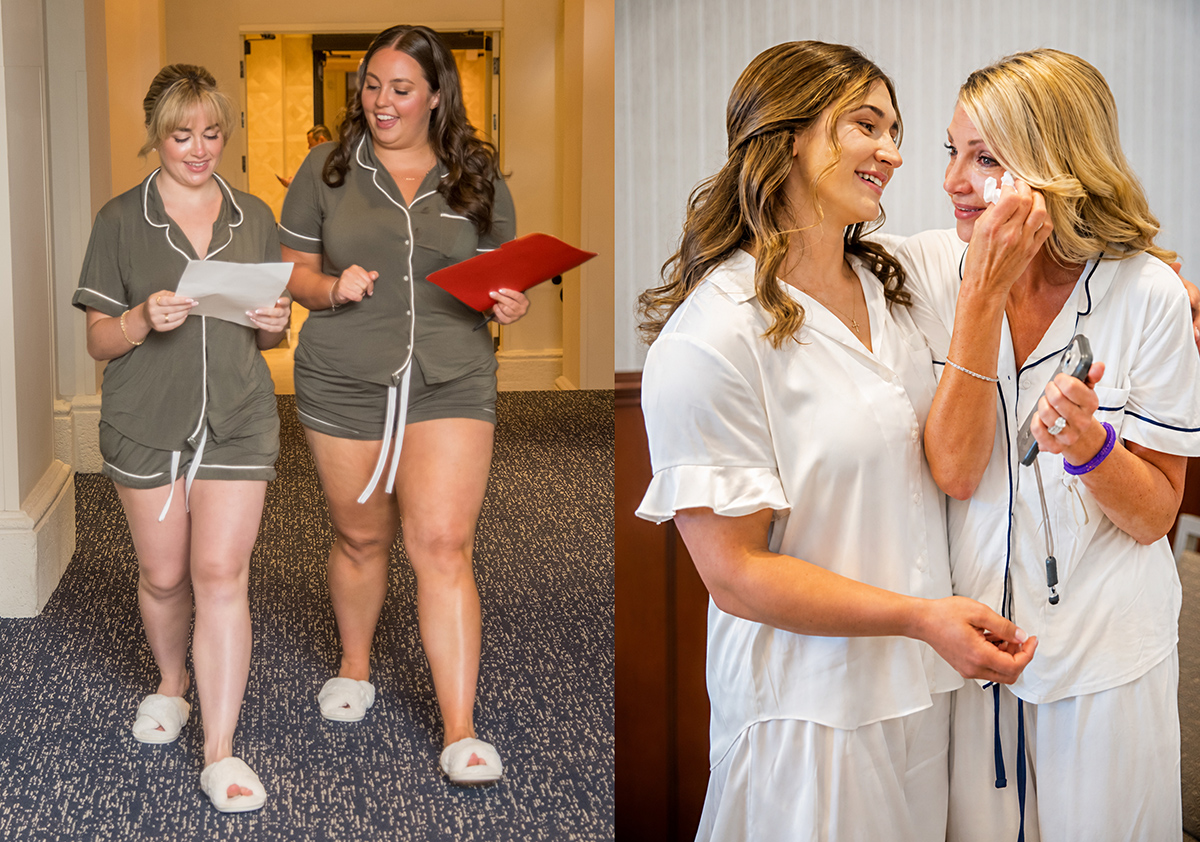
Some of the best getting-ready photographs come from the moments happening between the scheduled pictures. On the left, the maid and matron of honor return with their freshly written wedding toasts in hand, ready for the reception later that evening. On the right, Catarina shares a quiet and emotional moment with her mother before the wedding day moves into full swing. Together, these photographs capture the anticipation, love, and relationships that make the hours before the ceremony so meaningful.
I began photographing Catarina and her bridesmaids while David and the groomsmen stayed completely out of sight. Once we finished the bridal preparations, I met up with the guys to capture their portraits before everyone boarded the shuttle for the church.
Planning these logistics ahead of time is one of the reasons wedding days stay relaxed. Rather than feeling rushed, everyone had time to enjoy the morning, spend time with family and friends, and prepare for the ceremony without unnecessary stress.
When Should Wedding Photography Begin?
One of the most common questions I hear from couples is, “When should my wedding photographer arrive?”
For most weddings, I recommend beginning photography three to four hours before the ceremony. By the time I arrive, I like the bride’s hair and makeup to be either finished or very close to completion. This gives me plenty of time to photograph the excitement of the morning while ensuring the bride already looks her best.
It also creates opportunities for creative photographs like the one below. While it looks as though Catarina is having her makeup applied, her makeup was actually almost finished. That allowed me to concentrate on creating an artistic image that tells the story of the morning rather than documenting every step of the makeup process.
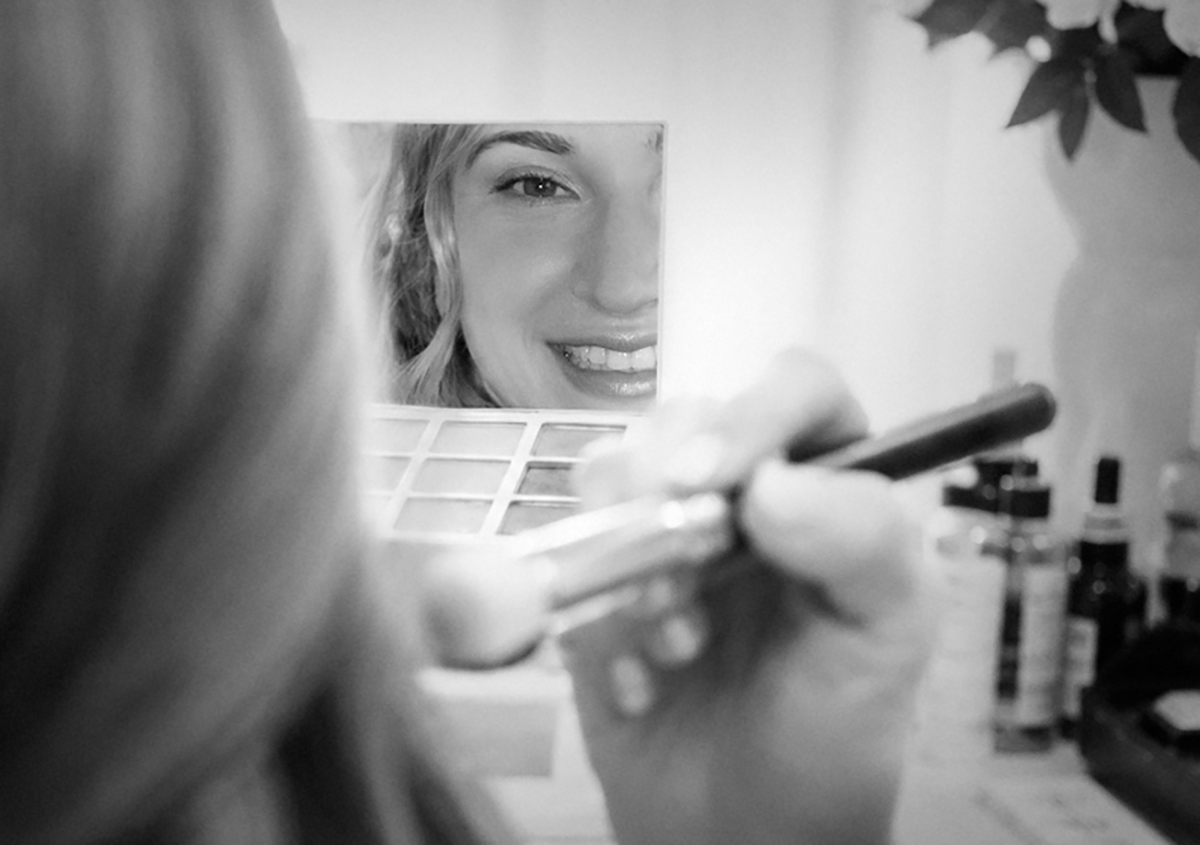
One of my goals during every wedding is to create photographs that are more than simple documentation. By carefully composing Catarina’s reflection in the makeup mirror while the makeup artist made the final touches, I was able to create an artistic portrait that tells the story of the morning. These quiet moments before the ceremony are often some of a bride’s favorite memories because they capture the excitement, anticipation, and emotion before the wedding day truly begins.
The getting-ready portion of the day is often filled with anticipation, laughter, and quiet moments that disappear once the ceremony begins. It’s one of my favorite parts of the wedding day because it gives me the opportunity to create photographs that are both creative and personal.
One of my favorite parts of photographing weddings is creating detail photographs that many couples never expect.
Creative Wedding Ring Photography: Every Ring Has a Story
I think that title fits your personality well because it emphasizes that you’re not just documenting jewelry—you’re creating artwork from one of the most meaningful symbols of the wedding day. It also transitions naturally from the getting-ready section into your discussion of detail photography.
As a South Florida Catholic Wedding Photographer, I don’t just document events—I look for opportunities to create artwork. Wedding rings symbolize a lifelong commitment, so I believe they deserve photographs that are every bit as meaningful as the ceremony itself.
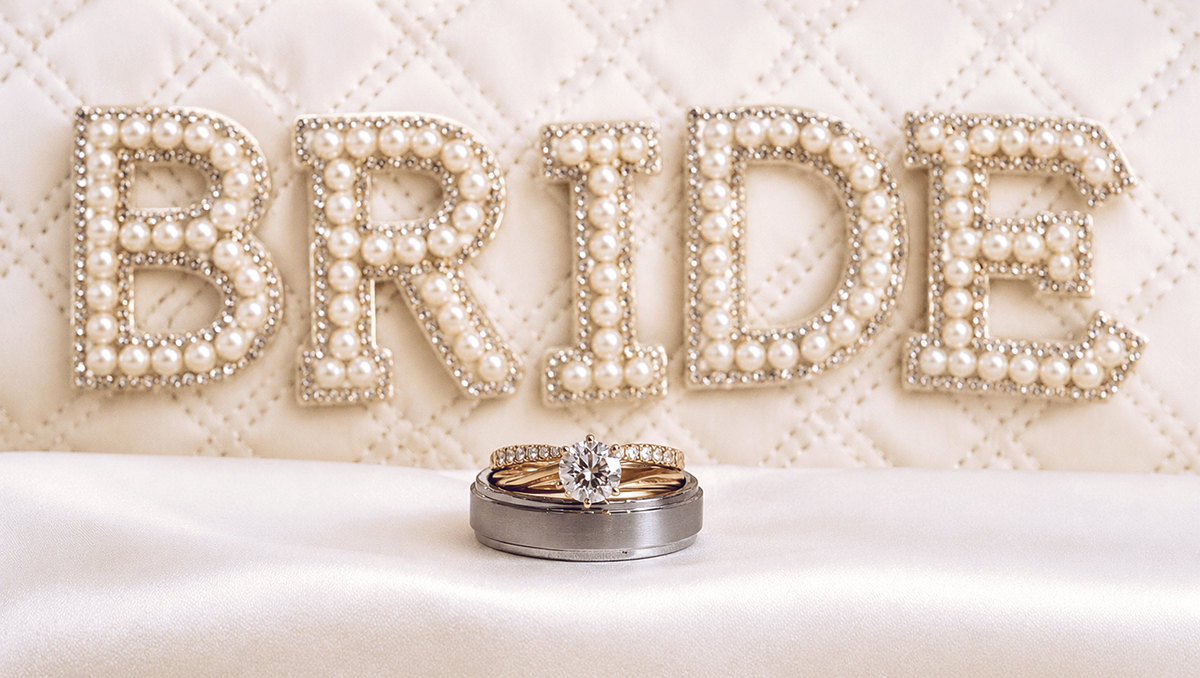
I believe every wedding ring deserves more than a simple snapshot. Photographing wedding rings gives me an opportunity to slow down, think creatively, and design an image that reflects the personality of each couple. Some ring photographs come together in just a few minutes, while others require patience, experimentation, and a little problem solving. The size of the groom’s ring, the shape of the engagement ring, available light, and the time available during the wedding day all influence the final design. Whether I create the image during the getting-ready portion of the day or while guests are enjoying dinner, my goal is always the same—to produce a unique photograph that becomes an artistic part of the couple’s wedding story.
Creating a successful ring photograph isn’t always as simple as placing two rings together and pressing the shutter. Every ring is different. Some engagement rings balance beautifully, while others simply refuse to cooperate. Wide wedding bands, narrow bands, hidden settings, lighting conditions, and even the amount of time available during the wedding day all become part of the creative process.
Sometimes I have twenty minutes to experiment.
Sometimes I have two.
That’s part of the challenge—and one of the reasons I enjoy photographing wedding rings so much. Every wedding presents a new opportunity to create something unique.
If you’d like to see more examples of my creative wedding ring photography, I’ve assembled a collection of some of my favorite images over the years. You’ll find them in the galleries linked below, where you’ll see how different lighting, reflections, textures, and creative compositions can transform a simple detail into a piece of art.
Explore more creative wedding ring photography:
Looking for interesting shapes, reflections, and unexpected props is part of the creative process. While guests were enjoying dinner, I borrowed a few olives from the bar and turned a simple martini garnish into a playful wedding ring photograph. Every wedding gives me an opportunity to create something unique. From the Martini Bar to the Wedding Album
A Sweet Twist on Wedding Ring Photography
One of the things I enjoy most about photographing wedding rings is finding ways to personalize each image. At this wedding, the bride and groom had an incredible dessert station, so I wanted to create a photograph that reflected their celebration. This image was inspired by roasting marshmallows over an open flame—but don’t worry, the wedding rings were never placed anywhere near the fire. The final photograph is a carefully crafted composite of several images, allowing me to safely create the illusion while protecting the rings. Creative detail photographs like this help tell the complete story of the wedding day while giving every couple something truly one of a kind.
Fireball Whiskey & Wedding Rings | A Reception Inspired Ring Portrait
During the reception, the bridal party was gathered around the bar enjoying celebratory Fireball shots. While everyone was laughing and having a great time, I borrowed the bride and groom’s rings for just a few moments and created this image. One of my favorite aspects of wedding photography is allowing the events of the day to inspire unique ring photographs that become part of the couple’s story. Every wedding is different, and I enjoy finding creative ways to reflect each couple’s personality in my ring photography.
The Wedding Day Team Behind the Scenes
One of the things I enjoy most about photographing weddings is documenting everything that happens behind the scenes. While everyone sees the ceremony and reception, there’s an entire team working long before the first guest arrives. From steaming dresses and finishing hair and makeup to keeping the timeline on track, every detail matters. Those moments are just as much a part of the wedding story as the first kiss.
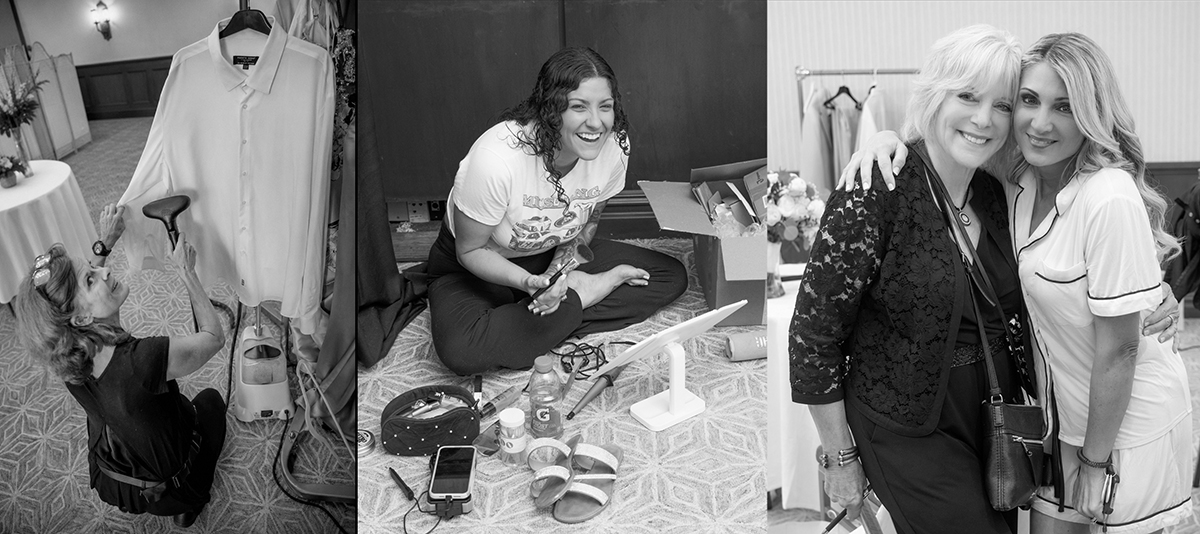
These three photographs capture some of the moments that happen before the ceremony ever begins. On the left, a wedding attendant carefully steams the groom’s shirt to make sure every detail is perfect. In the center, one of the bridesmaids takes a quiet moment to relax while getting ready. On the right is wedding planner Joni Scalzo of Your Special Day by Joni, sharing a smile with the bride’s mother. Joni has been planning weddings throughout South Florida for many years, and I’ve had the pleasure of working alongside her at Catholic, Jewish, Indian, Persian, and many other celebrations. Her calm personality, organization, and attention to detail help every wedding day run smoothly. You can learn more about Joni at Your Special Day by Joni.
The bride’s mother is also known online as Micia Mammas, where she shares Italian recipes, entertaining ideas, family traditions, and travel experiences with a large social media following. You can visit her Instagram here: @miciamammas on Instagram.
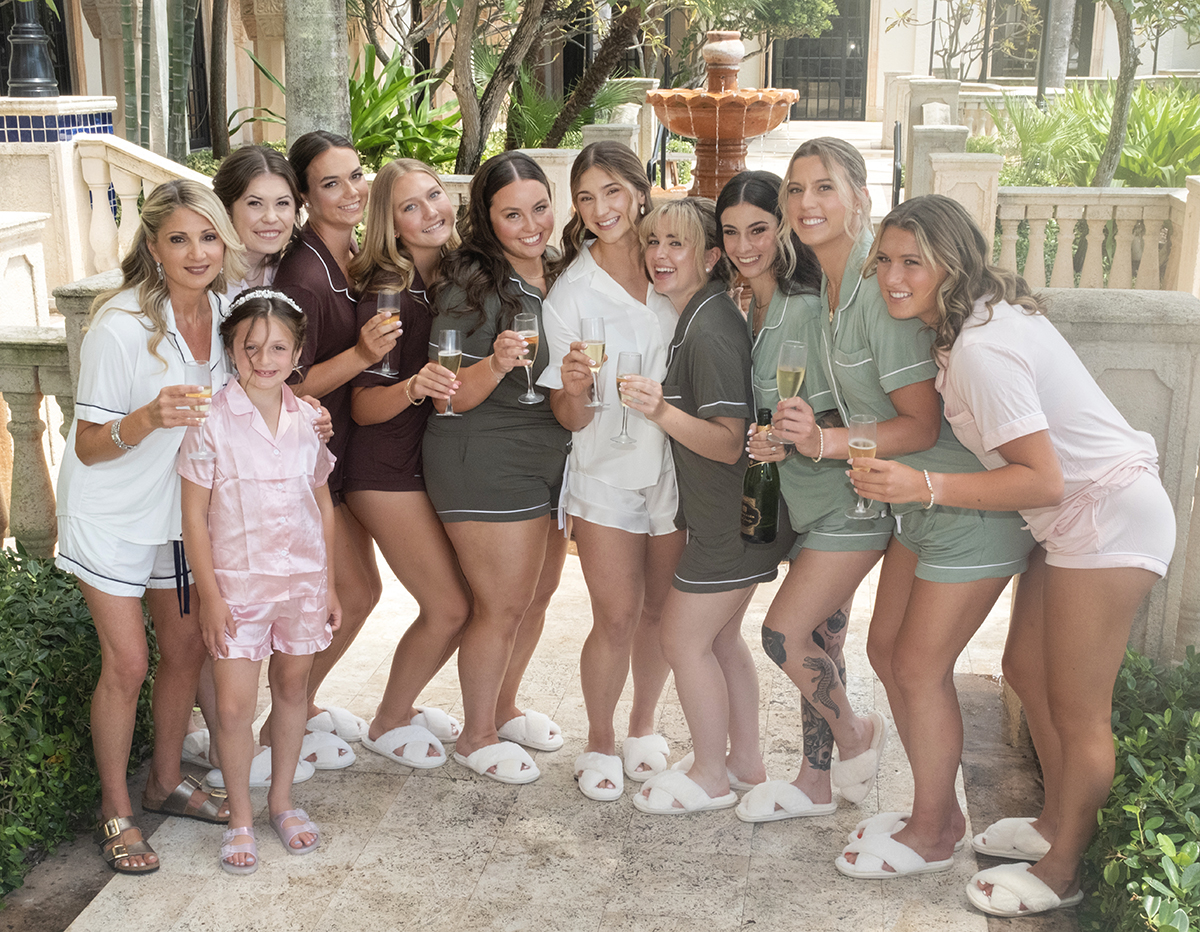
Once everyone’s hair and makeup were finished, we stepped outside for a quick champagne toast before the day really began. Rather than simply lining everyone up, I had the bridesmaids gather together, raise their glasses, and celebrate. The toast naturally brought everyone close together, making it easy to see every smiling face while creating genuine excitement and laughter. Before taking the photograph, I positioned the group in soft, flattering light and added just a touch of bounced flash to create natural catchlights in their eyes, giving the image a bright, lively feel without looking artificial.
Why Lighting Matters During the Getting Ready Photos
One of the biggest differences between an average photograph and a professional portrait is lighting. During the getting-ready portion of the wedding day, I look for soft, flattering light that complements everyone’s skin tones while avoiding harsh shadows. Even outdoors, I often use a small amount of fill flash to brighten the eyes and add life to the image without making it obvious that flash was used. Combining beautiful light with genuine interaction—like this champagne toast—creates photographs that feel natural, joyful, and full of personality.
Personalizing Wedding Portraits Makes Every Wedding Unique
As a South Florida Catholic Wedding Photographer, I never want couples to feel like they’re receiving the same photographs as everyone else. Every wedding has its own story, traditions, careers, hobbies, and personalities, and I look for opportunities to incorporate those details into the photographs.
In this case, several members of the wedding party proudly serve in the military. Rather than simply walking past this colorful artwork, we used it to create a lighthearted portrait that reflects an important part of their lives. These are often the photographs that couples remember most because they’re personal, unexpected, and impossible to recreate at another wedding.
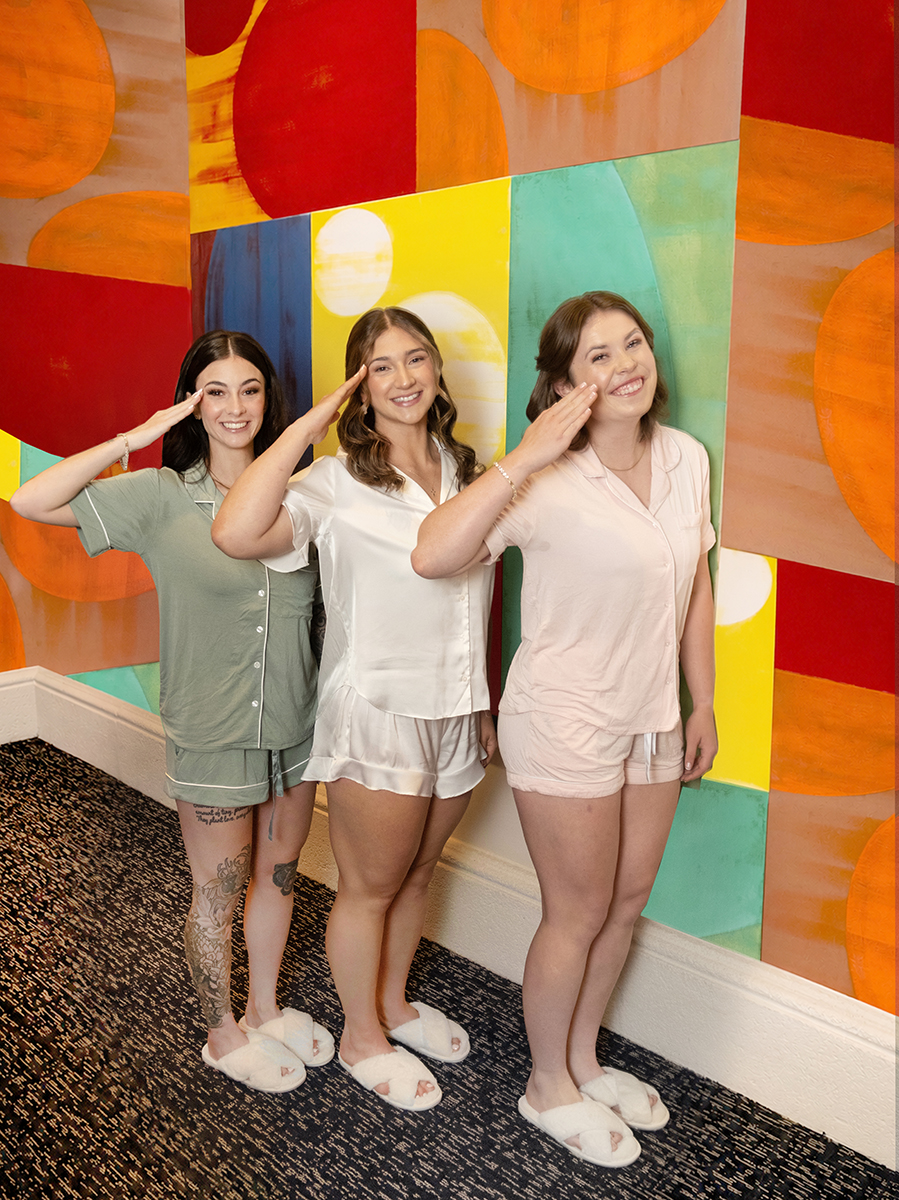
One of my favorite parts of wedding photography is creating portraits that reflect the personalities and backgrounds of the couple. Catarina, David, and several members of their wedding party proudly serve in the military, so it only seemed fitting to capture a photograph that honored that part of their lives. When I discovered this colorful artwork at The Boca Raton, I knew it would make a fun and vibrant backdrop. The military salute added a personal touch that made this photograph unique to their wedding day.
A Helpful Tip for Couples
If you’re planning your wedding, consider scheduling a private First Look with your father—or with anyone who has played a significant role in your life. These quiet moments require only a few minutes but often produce some of the most heartfelt photographs of the entire day.

One of the most meaningful moments of the wedding day often happens before the ceremony even begins. After Catarina was dressed, we invited both her father and her stepfather to see her in her wedding gown for the very first time. Since both men played an important role in raising her, it was important that each of them had their own special moment.
As a South Florida Catholic Wedding Photographer, I’ve learned that fathers are often unintentionally left out of much of the wedding day. While the bride is surrounded by bridesmaids, hair stylists, makeup artists, and family members, the fathers are usually waiting somewhere else—often in the lobby, with the groom, or simply wondering when they’ll finally get to see their daughter.
Many fathers have told me they feel like spectators during the getting-ready portion of the day. They’re usually not involved in dress shopping, choosing flowers, or decorating the reception. Yet for many families, the father has been counting down to this day just as much as everyone else.
Creating a private First Look gives fathers the opportunity to slow down, take it all in, and experience a moment that belongs entirely to them. The reactions are genuine, emotional, and completely unscripted—and they often become some of the most treasured photographs in the entire wedding collection.
I still laugh when I think about one father who wore a T-shirt that read:
“Father of the Bride — Scan Here for Payment.”
It got plenty of laughs, but it also reminded everyone of something important: fathers aren’t just writing checks—they’re giving away one of the most important people in their lives.
A Great Wedding Timeline Makes Great Photography Possible
As a South Florida Catholic Wedding Photographer, I believe my job has two equally important responsibilities.
The first is to create photographs that are artistic, creative, and unique. These are the images that stop people in their tracks—the portraits that become wall art, album covers, and family favorites.
The second responsibility is what I jokingly call “staying out of trouble.”
Every wedding has a collection of photographs that absolutely must be captured. The bride with her mother. The bride with her father. Parents together. Brothers and sisters. Grandparents. Each bridesmaid. The entire bridal party. Individual portraits of the bride and groom. Then the entire process repeats with the groom’s family.
These aren’t optional photographs—they’re the pictures families will treasure for generations.
That’s why I spend so much time working with couples and planners before the wedding day. A well-designed timeline creates enough room for both the required family portraits and the creative photography that makes every wedding unique. Good planning allows everyone to relax, enjoy the day, and ensures that nothing important is forgotten.
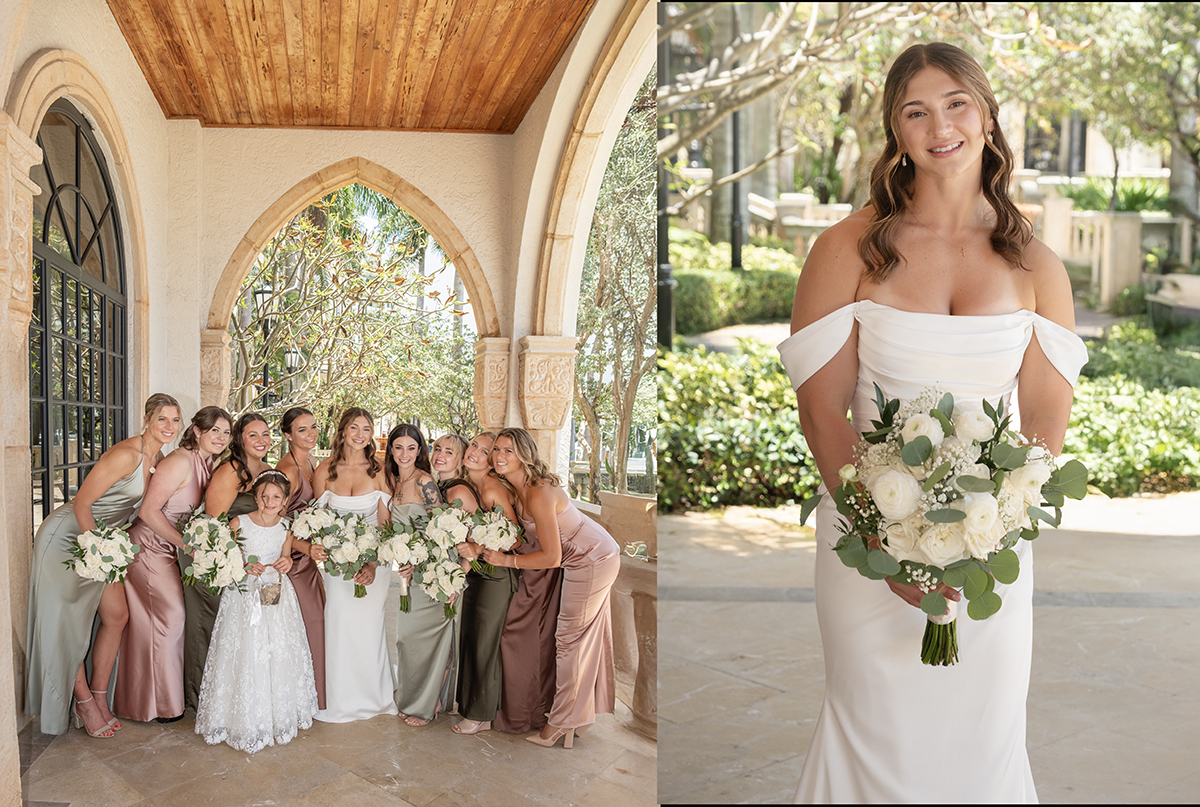
Wedding photography is about much more than creating beautiful portraits. While I love producing artistic images that capture the personality of each couple, I also understand that every wedding comes with a list of photographs that simply cannot be missed. Family portraits, the bridal party, parents, siblings, grandparents, and individual bridal portraits all become treasured family heirlooms. A carefully planned timeline allows me to capture these important photographs while still leaving plenty of time to create the creative, magazine-style portraits every couple dreams about.
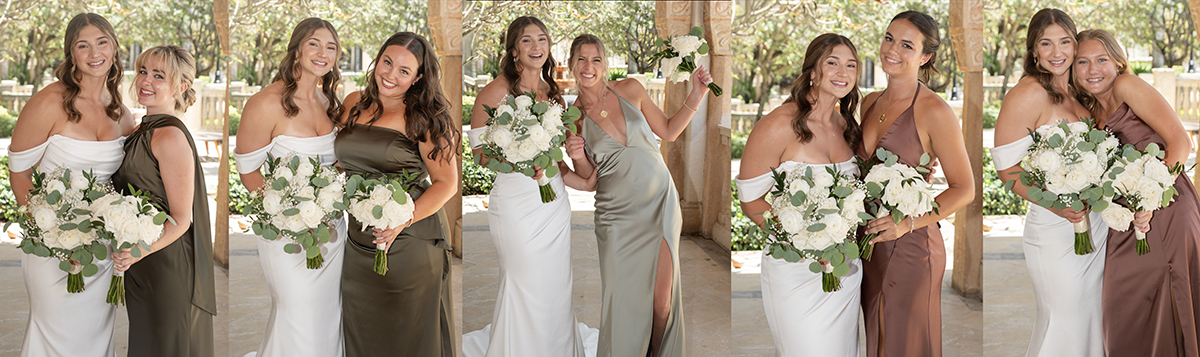
One tradition I almost always recommend is photographing the bride with each bridesmaid individually. While the full bridal party portrait is important, these one-on-one photographs become personal keepsakes that each bridesmaid will treasure long after the wedding day. I keep these portraits relaxed and natural, encouraging genuine smiles and interaction rather than stiff poses. By moving quickly and keeping the atmosphere fun, we create beautiful portraits without slowing down the wedding timeline.
Why I Photograph the Bride with Every Bridesmaid
As a South Florida Catholic Wedding Photographer, I believe every member of the bridal party deserves their own moment in front of the camera. Group photographs are wonderful, but individual portraits tell a more personal story.
These photographs celebrate the friendships that helped shape the wedding day. Whether it’s a lifelong childhood friend, a college roommate, a sister, or a cousin, each bridesmaid played an important role in Catarina’s life. Taking just a minute or two to create these portraits ensures everyone leaves with a meaningful photograph they’ll be proud to frame, share, and remember.
Because we planned the timeline carefully, there was plenty of time to photograph the entire bridal party, create individual portraits, and still leave room for creative bridal images before leaving for the ceremony.
The Groom with Each Groomsman: More Than Just a Group Photo
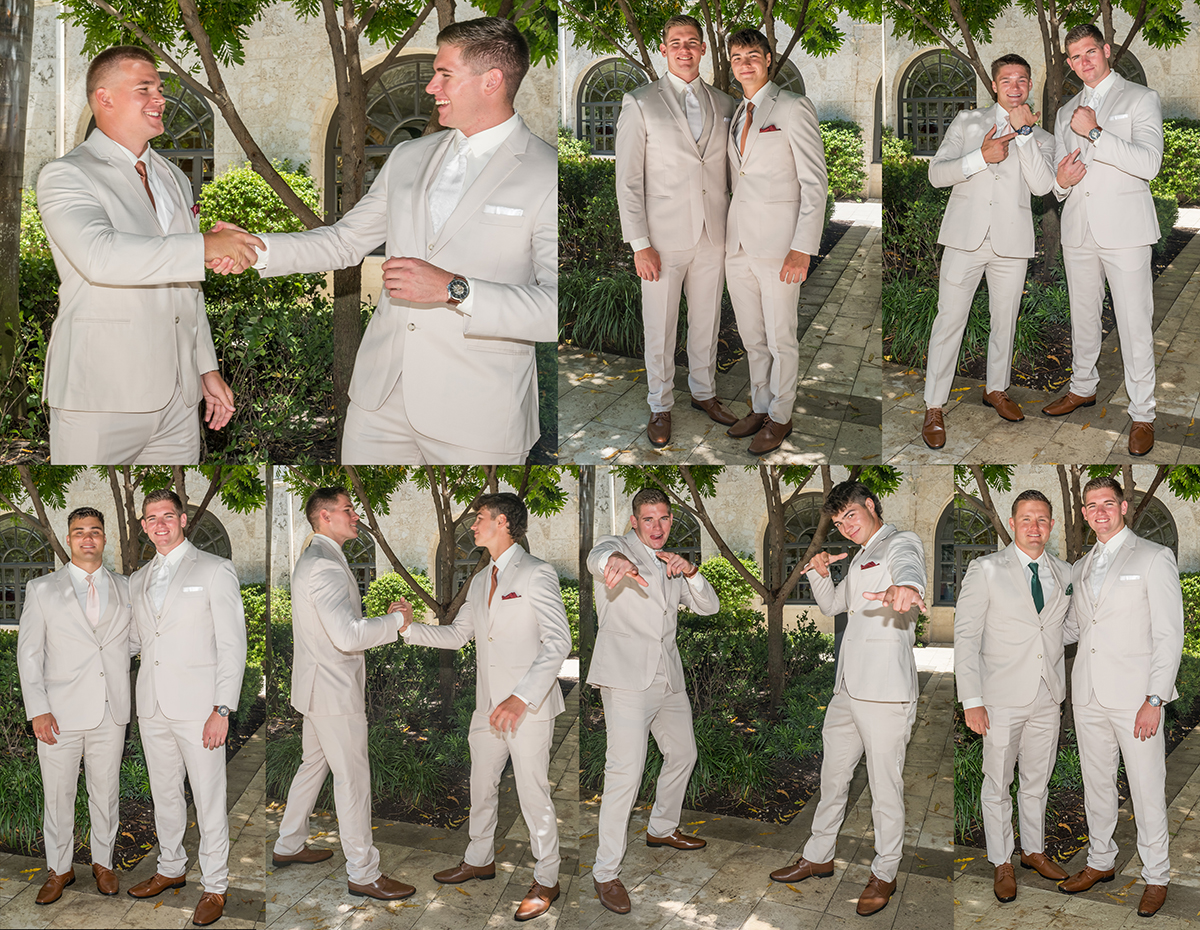
One of my goals as a South Florida Catholic Wedding Photographer is to make sure every important relationship is photographed. Along with the traditional group portraits, I always like to photograph the groom with each of his groomsmen individually. This group made my job easy—the guys were relaxed, full of personality, and each one brought their own style in front of the camera. The result was a collection of portraits that were completed quickly while capturing the friendships that made the day so memorable.
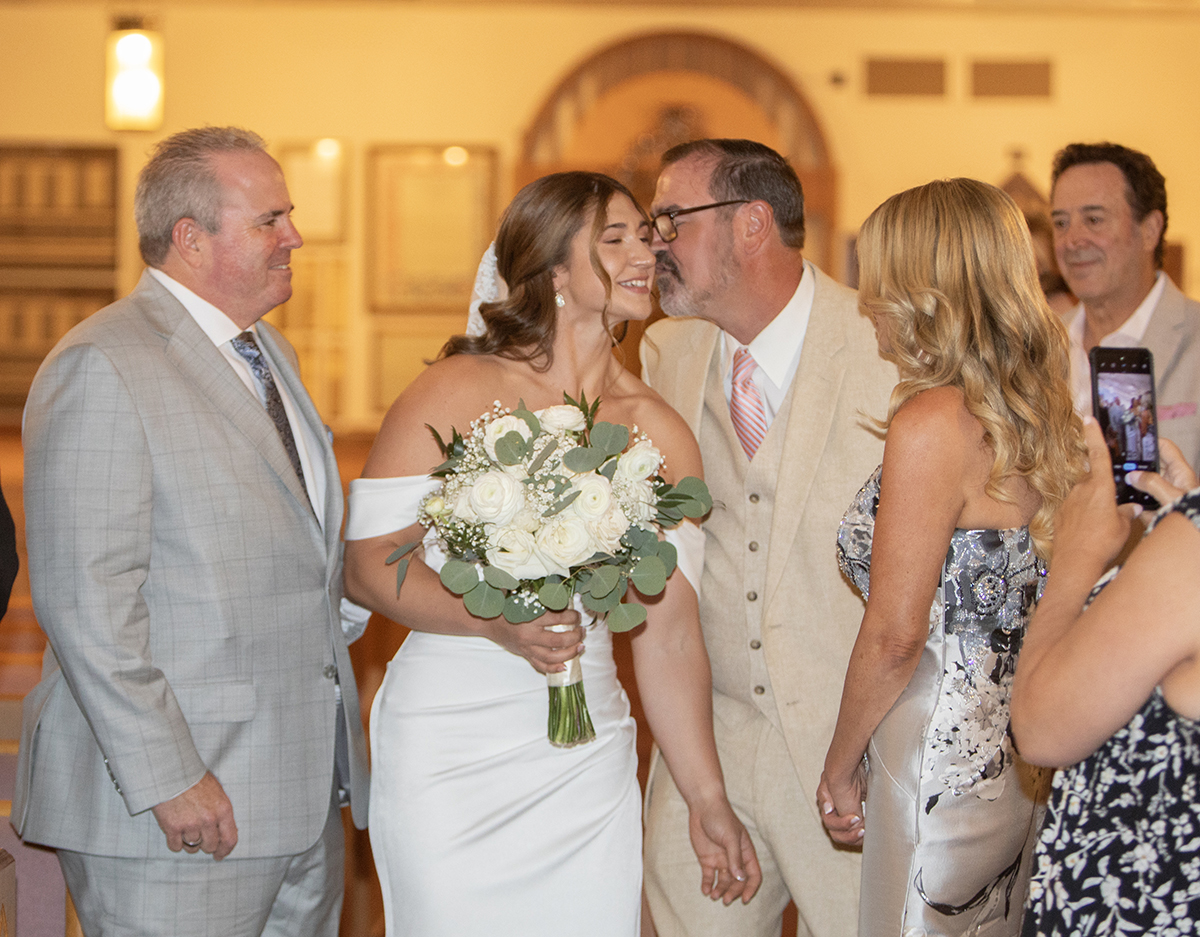
The processional is one of the most emotional moments of any Catholic wedding ceremony. As Catarina began her walk down the aisle, family members watched with excitement and emotion as she made her way toward David. One of the questions couples frequently ask is whether photographers are allowed to use flash during a church ceremony. Every church has its own policies, but many churches permit flash photography during the processional and recessional while asking photographers to stop using flash once the ceremony begins. That’s another reason it’s so important to hire a photographer who understands church etiquette and respects the rules of each venue. By discussing the church’s photography guidelines in advance, I can focus on capturing meaningful moments like this while remaining as unobtrusive as possible throughout the ceremony.
For Catarina and David’s wedding at Our Lady of Mercy Catholic Church, flash photography was permitted. Even so, I chose to use very subtle bounce flash at a low power setting. Rather than directing light toward the couple or the altar, I bounced the light off the ceiling and walls whenever possible. This technique creates soft, natural-looking light that blends beautifully with the church’s existing lighting while remaining virtually unnoticed by the congregation.
Why Detail Photographs Matter on Your Wedding Day
One of the things that separates a complete wedding story from a collection of portraits is attention to detail. As a South Florida wedding photographer, I don’t just photograph the big moments like the First Kiss and the first dance. I also look for the quiet, meaningful details that often go unnoticed during the excitement of the day. A simple gesture, like Catarina resting her hand on David’s arm during the ceremony, becomes a timeless reminder of the emotion, anticipation, and connection they shared as they began their marriage.
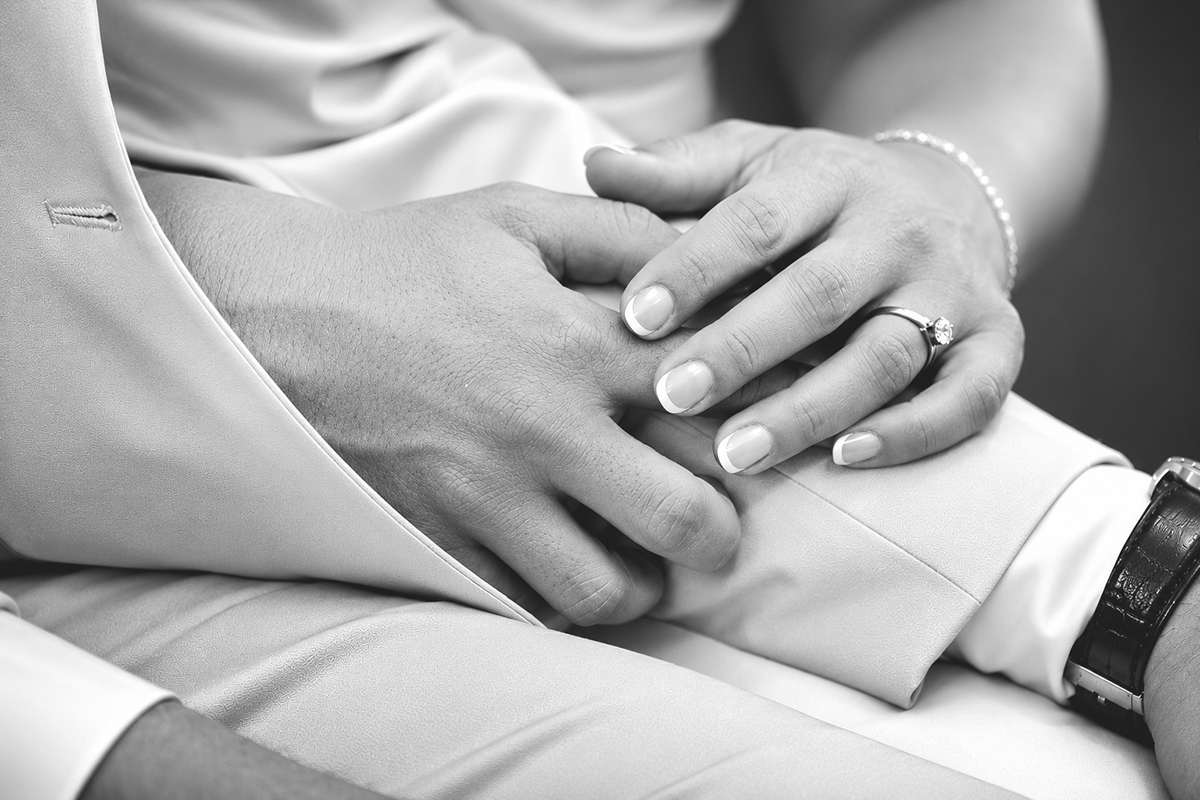
While the ceremony is filled with unforgettable moments, I also make it a point to look for the small details that many people never notice. Catarina gently resting her hand on David’s arm speaks volumes without showing either of their faces. Her engagement ring, fresh French manicure, bracelet, and the texture of David’s suit all come together to create a photograph that quietly tells the story of their wedding day. Images like this add depth to every wedding collection and help preserve not only what happened, but also the little moments that might otherwise be forgotten.
When flash isn’t allowed, professional equipment becomes even more important. Depending on the church, I may photograph the ceremony using a sturdy tripod together with fast professional lenses that feature very wide maximum apertures. These lenses allow me to capture sharp images in extremely low light while preserving the natural atmosphere of the church.
Lighting conditions can also vary dramatically from one church to another. Bright stained-glass windows, tungsten lighting, LED fixtures, and daylight can all create different color temperatures within the same sanctuary. That’s one of the reasons I always photograph weddings in RAW format. RAW files provide significantly greater flexibility during post-processing, allowing me to fine-tune exposure, recover highlight and shadow detail, and achieve accurate, natural color that reflects the beauty of the ceremony.
Why Anticipation Matters in Wedding Photography
One of the biggest differences between simply taking photographs and telling a wedding story is anticipation. As a South Florida wedding photographer, I know that the most meaningful images often happen between the scheduled events. While everyone is watching the bride walk down the aisle, I’m also watching the groom’s reaction, the parents’ expressions, and the emotions unfolding throughout the church. Those unscripted moments often become the photographs couples treasure most because they capture genuine feelings that can never be repeated.
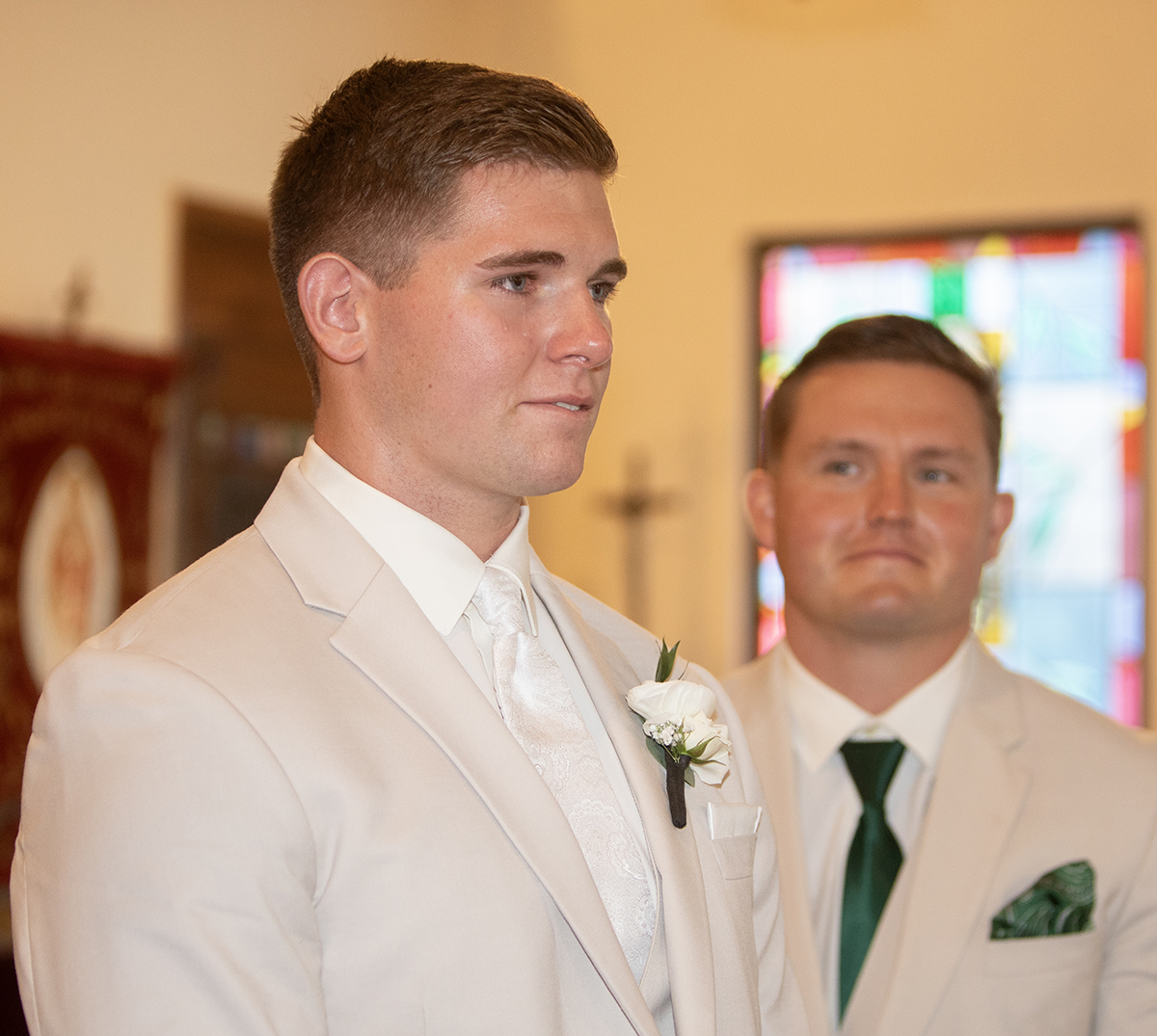
Every photographer expects to capture the bride walking down the aisle. The real challenge is watching for everything happening around that moment. As Catarina entered the church, I kept my attention on David’s reaction. A single tear began to roll down his face as he saw his bride for the first time that day. Moments like this happen in an instant and cannot be recreated. One technique I’ve developed over many years of photographing weddings is shooting with both eyes open. While one eye stays in the viewfinder, the other is constantly scanning the scene for emotion, reactions, and unexpected moments. That habit allows me to anticipate photographs that many people never even realize happened until they see them later.
At the end of the day, the technology is only part of the equation. The most important skill is knowing when to press the shutter. Anticipating the exchange of vows, the blessing of the rings, the First Kiss, and the joyful recessional allows me to capture the story of the ceremony without ever becoming part of it.
Choosing the right South Florida Catholic wedding photographer is about much more than finding someone who takes beautiful pictures. Catholic weddings have their own rhythm, traditions, and timeline, and an experienced photographer understands how to capture every meaningful moment while keeping the day relaxed and enjoyable for the couple.
When Should Wedding Photos Be Black & White?
Many couples ask if I deliver wedding photographs in both color and black and white. The answer is yes—but only when black and white truly enhances the image.
Churches are among the most challenging places to photograph because they often contain multiple light sources all at once. Candlelight, stained-glass windows, fluorescent fixtures, tungsten lamps, halogen lighting, and natural daylight can all illuminate the same scene. Each light source has its own color temperature, and when they mix together they can create color casts that are difficult—or sometimes impossible—to eliminate completely.
Photographing every wedding in RAW format gives me tremendous flexibility to fine-tune white balance and color during post-production. However, there are moments when color isn’t what makes the photograph memorable.
Emotion is.
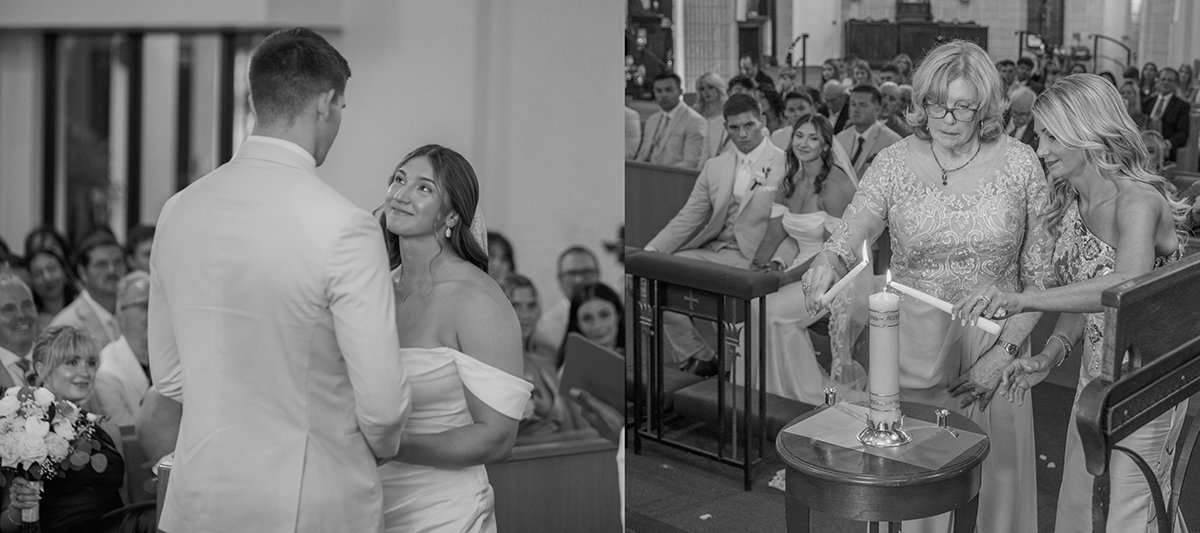
Catholic churches are beautiful, but they often combine candlelight, stained glass, fluorescent fixtures, tungsten lamps, and natural daylight—all of which produce different color temperatures. While photographing in RAW allows me to carefully balance these mixed light sources, some moments simply become more powerful in black and white. Rather than focusing on color, your attention is drawn to the emotion, the expressions, and the significance of the moment. It’s not about removing color—it’s about revealing what matters most.
A beautifully crafted black-and-white image removes the distraction of competing colors and allows the viewer to focus on the expressions, relationships, and significance of the moment.
The two photographs below are perfect examples. On the left, Catarina and David share an intimate glance during the ceremony—a quiet moment that says everything without words. On the right, family members participate in the lighting of the Unity Candle, one of the meaningful traditions of many Catholic weddings. Converting these moments to black and white emphasizes emotion, light, and composition while giving the photographs a timeless quality that will never go out of style.
Catarina and David’s wedding was a wonderful example of how a thoughtfully planned wedding day allows everyone—from the couple to their families—to simply enjoy the celebration. From the excitement of getting ready at The Boca Raton to their beautiful ceremony at Our Lady of Mercy Catholic Church, followed by an elegant reception back at The Boca Raton, every part of the day flowed naturally and gave us countless opportunities to create photographs that tell the complete story of their wedding.
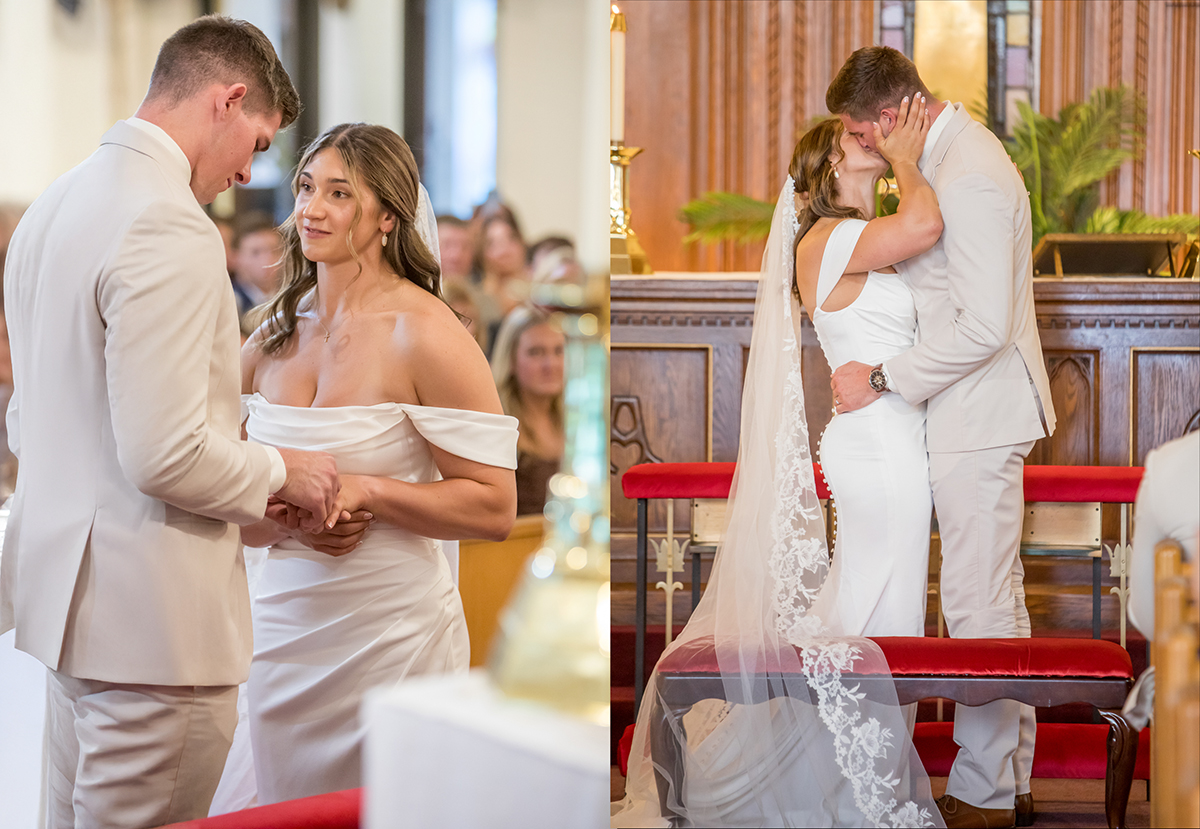
Two of the most important moments of any Catholic wedding ceremony—the exchange of rings and the First Kiss. Throughout the ceremony, I’m constantly anticipating what will happen next so I’m already in position when these moments unfold. On the left, Catarina and David exchange rings as they make their commitment to one another. Moments later, they share their First Kiss as husband and wife. These photographs happen only once, and there are no second chances, which is why experience, preparation, and anticipation are so important when photographing a Catholic wedding ceremony.
I was especially happy to photograph this wedding because it was referred to me by Joni Scalzo of Your Special Day by Joni. Joni and I have worked together for many years on weddings representing many different cultures and traditions. Together we’ve photographed Catholic weddings, Jewish weddings, Indian weddings, and even a spectacular two-day celebration where the couple celebrated with a traditional Indian wedding one day followed by a Catholic ceremony the next.
Working alongside an experienced wedding planner like Joni means that everyone is focused on the same goal—making the wedding day as stress-free as possible while giving the bride and groom plenty of time to enjoy every moment.
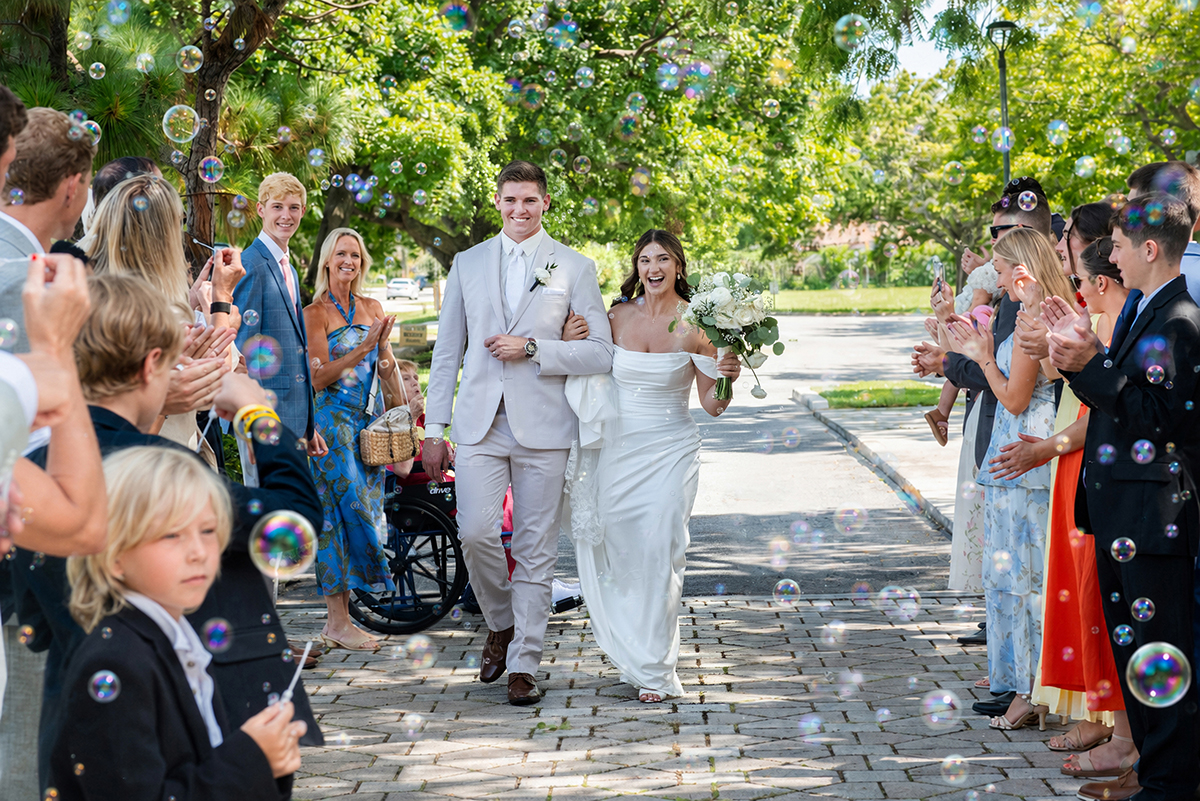
With family and friends lined up outside Our Lady of Mercy Catholic Church, Catarina and David began their walk through a tunnel of cheering guests and bubbles. Their expressions capture that instant when the formal ceremony was over and the celebration truly began.
A Beautiful Catholic Wedding Ceremony
Catholic weddings are filled with meaningful traditions that deserve to be photographed respectfully and thoughtfully.
At Our Lady of Mercy Catholic Church, Catarina and David exchanged vows surrounded by family and friends in a beautiful ceremony that reflected both their faith and their commitment to one another.
One of the things I love about photographing Catholic weddings is that every ceremony tells a story through meaningful moments rather than elaborate productions. The exchange of vows, the blessing of the rings, the first kiss as husband and wife, and the expressions shared by parents and grandparents often become some of the most treasured photographs from the entire wedding day.
Because every church has its own guidelines regarding photography, experience matters. Knowing when to move, where to stand, and how to work quietly allows me to document the ceremony without becoming a distraction. My goal is always to preserve the dignity of the service while capturing every important moment naturally.
Following the ceremony, we took advantage of the beautiful altar for family portraits and photographs of the newly married couple. These classic portraits are often among the images that families display for decades, so I always make sure they are photographed with care before everyone heads off to celebrate.
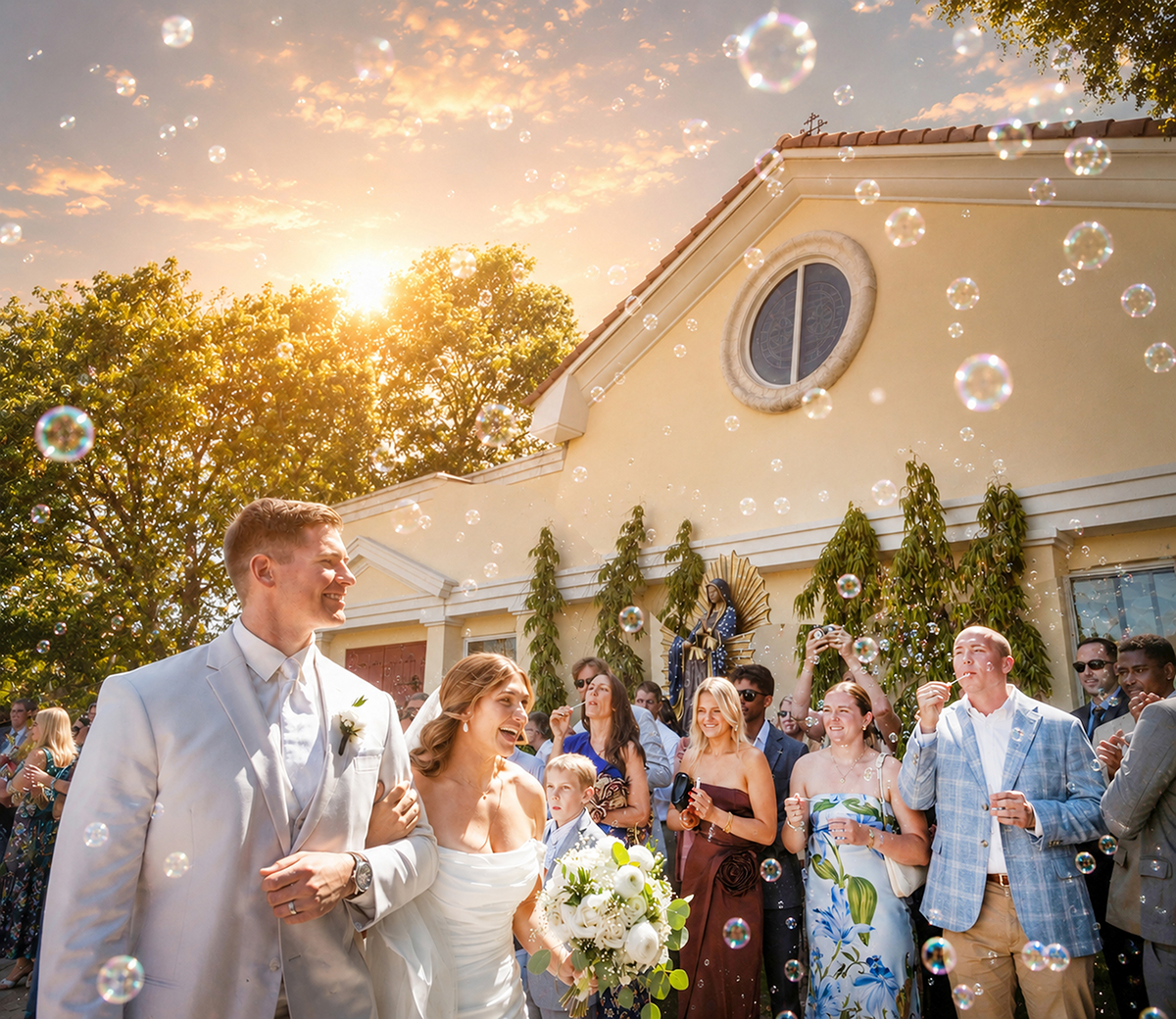
Catarina and David were greeted by a shower of bubbles as they walked out of Our Lady of Mercy Catholic Church as newlyweds. I found a position that allowed me to capture the bride and groom surrounded by their celebrating guests, with the bubbles glowing in the warm setting sun and the church completing the background.
From Sacred Ceremony to an Unforgettable Celebration
After the ceremony at Our Lady of Mercy, everyone returned to The Boca Raton for the next chapter of the wedding day. Rather than rushing straight into the reception, we built extra time into the timeline for family portraits, bridal party photographs, and romantic portraits of Catarina and David throughout the beautiful grounds of the resort. I also made sure the bride and groom had 30 to 45 minutes to relax, freshen up, and touch up makeup before the festivities began.

After returning from the church, I took Catarina and David around The Boca Raton for portraits using some of the resort’s beautiful interiors as our backgrounds. These two locations gave us completely different looks while keeping the photographs relaxed and elegant.
While we were photographing, guests enjoyed an elegant cocktail hour before making their way into the ballroom. Once the reception doors opened, the atmosphere changed instantly. Heartfelt toasts, incredible cuisine, nonstop laughter, and a packed dance floor created the perfect celebration. From emotional speeches to high-energy dancing, every moment was filled with excitement and genuine emotion, making it a joy to photograph from beginning to end.
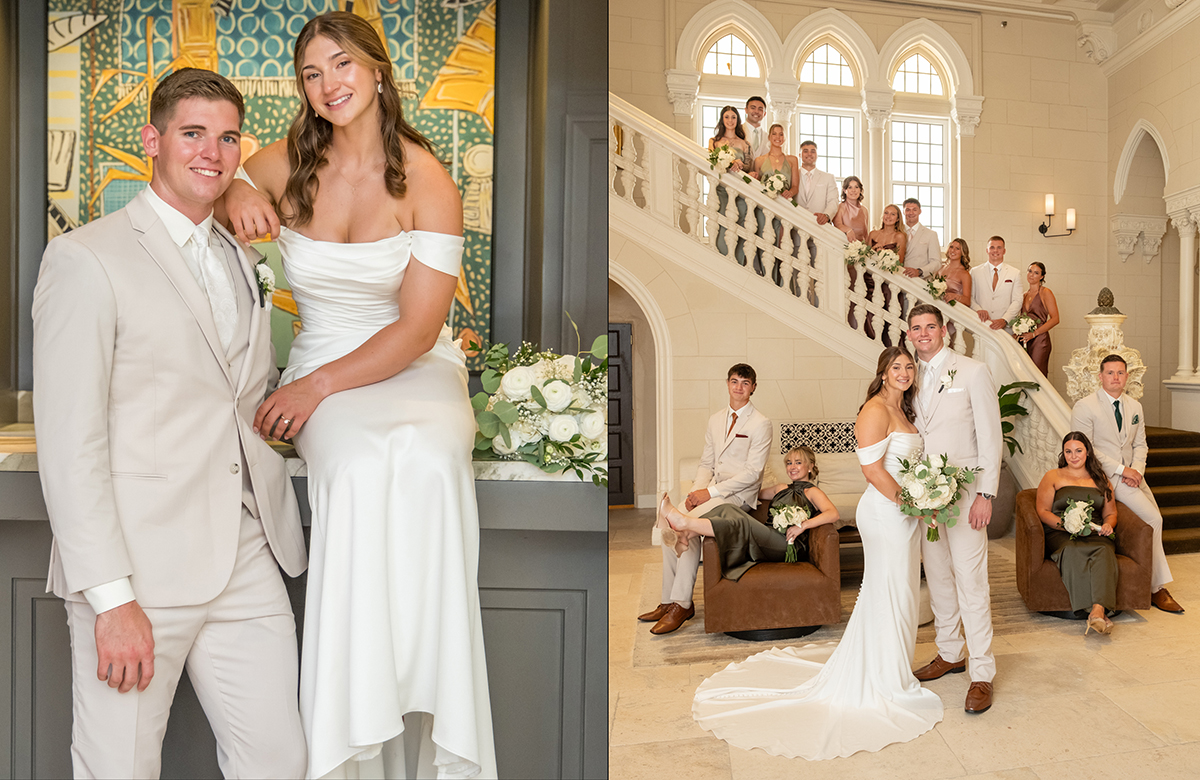
After returning to The Boca Raton, I continued photographing Catarina and David throughout the hotel before bringing the entire wedding party together for this portrait. I used the sweeping staircase, furniture, and different levels of the lobby to arrange everyone within the architecture rather than simply lining them up. While I was creating the photograph, someone from the hotel commented that they had never seen a wedding party posed in this particular area quite this way. Whether it had been done before or not, I took that as a wonderful compliment.
Photographing the Reception Ballroom before the Guests Arrive
While the guests were enjoying cocktail hour and I was finishing portraits of the bride, groom, and their families, another team was hard at work preparing the reception. Before anyone entered the ballroom, I always make it a priority to photograph the room exactly as it was designed. These are some of the only photographs that will ever exist of the reception untouched—before chairs are moved, centerpieces are admired up close, and the celebration begins.
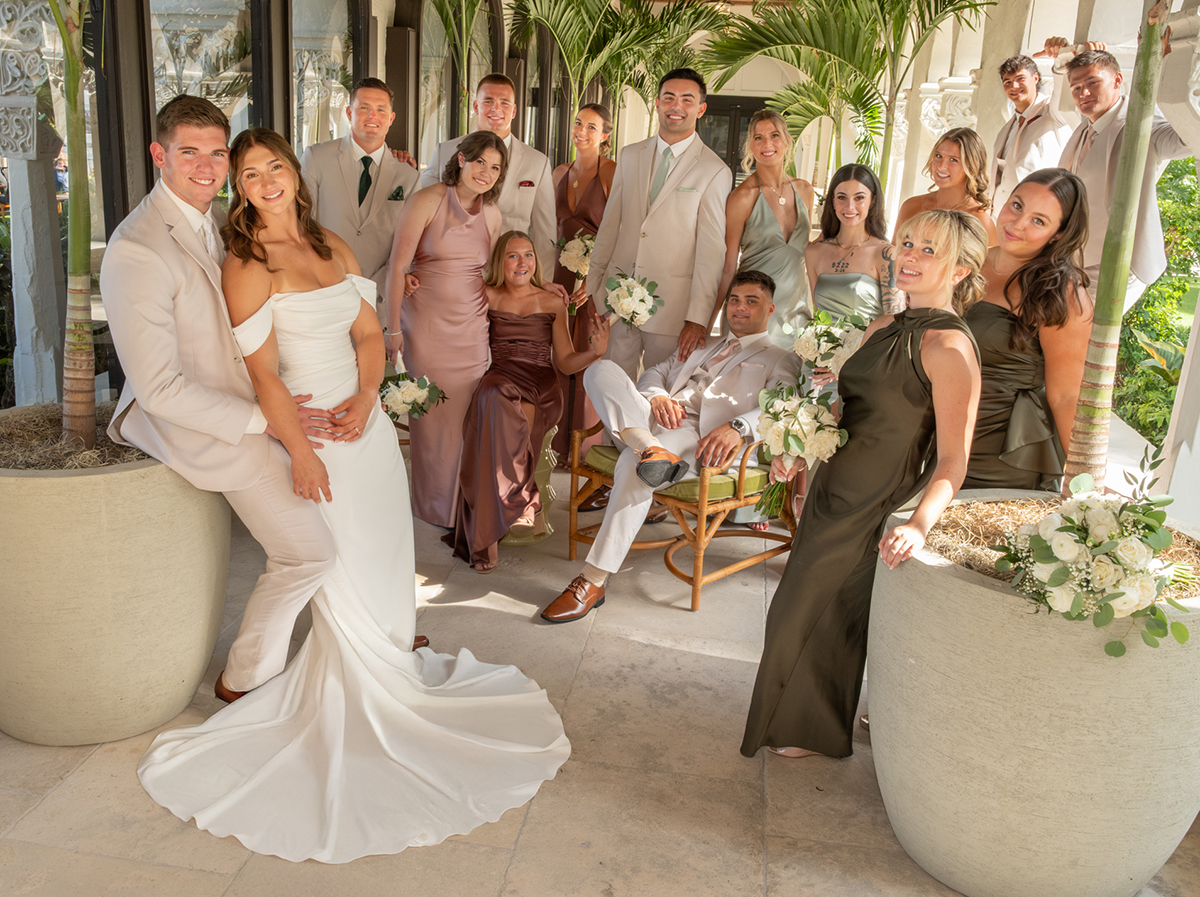
I never want a wedding party photograph to feel like everyone was simply lined up because that’s where we happened to be standing. Whenever possible, I look for interesting locations, architecture, light, and different levels that allow me to build a photograph around the personalities of the people in it. For Catarina and David’s wedding party, this tucked-away tropical setting at The Boca Raton gave everyone room to relax while creating a portrait that feels fun, spontaneous, and completely different from a traditional wedding party lineup.
For this wedding, Boca by Design created an elegant reception inside The Cathedral Ballroom at The Boca Raton, one of South Florida’s most spectacular event spaces. The soaring ceilings, dramatic architecture, candlelight, and cascading floral arrangements created a timeless atmosphere that perfectly complemented Catarina and David’s wedding.

The celebration continued with an elaborate cocktail hour at The Boca Raton, where guests enjoyed an incredible selection of appetizers, drinks, conversation, and live music. A mariachi band kept the room filled with music while family and friends relaxed and enjoyed the time between the ceremony and reception. Cocktail hour is another part of the wedding story I make a point of photographing—not only the entertainment and details, but also the candid moments of guests simply enjoying the celebration.
Over the years, I’ve photographed countless weddings, corporate galas, awards dinners, charity events, and special celebrations in the Cathedral Ballroom. Every event is different, but one thing never changes—the importance of documenting every detail before the room comes alive. Couples invest months planning the flowers, linens, candles, and décor. These photographs ensure those details become a permanent part of their wedding story.
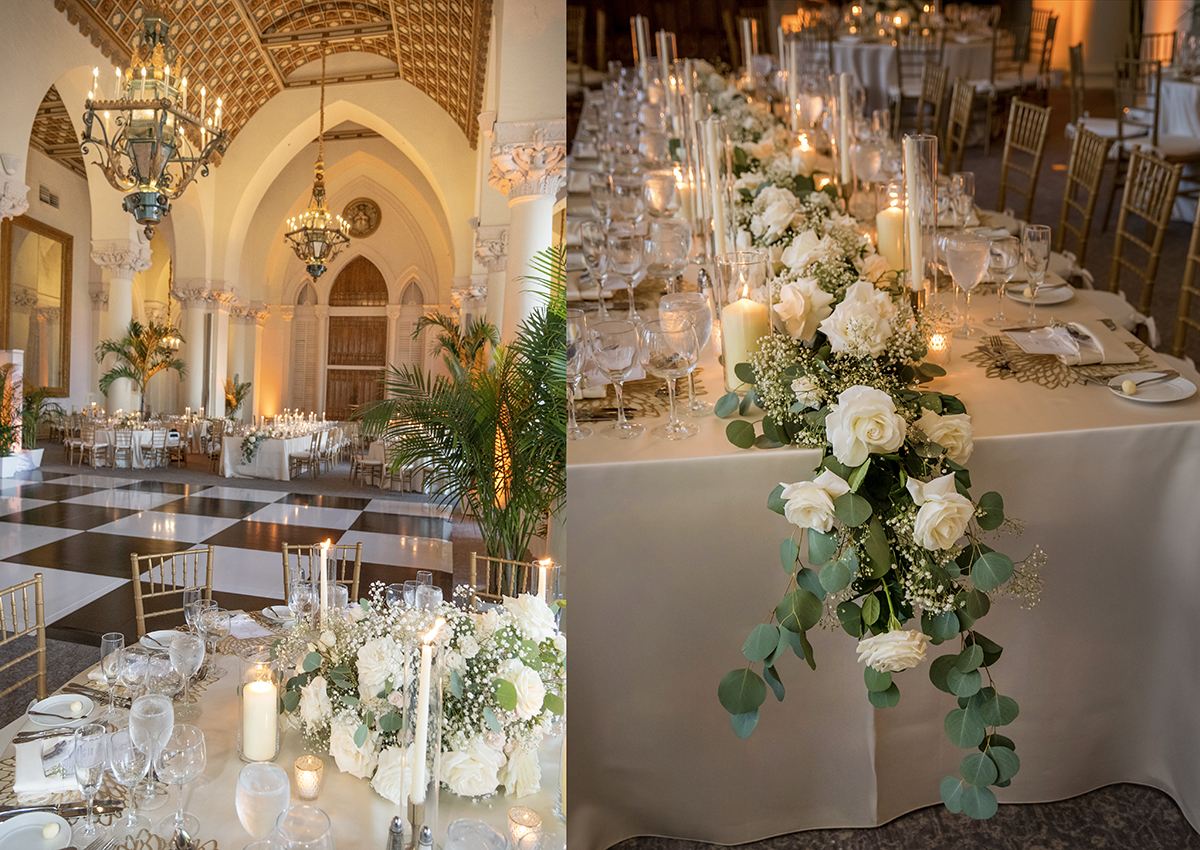
Before the ballroom doors opened, I took a few minutes to photograph the Cathedral Ballroom exactly as Catarina and David had envisioned it. The team at Boca by Design transformed the space with elegant floral arrangements, glowing candlelight, and timeless décor, creating a breathtaking setting for the evening’s celebration. These detail photographs preserve all of the hard work that goes into designing a wedding long before the first guest takes a seat.
Why Timing Is Everything During Wedding Toasts
Wedding toasts are some of the most emotional moments of the reception. As a South Florida Catholic Wedding Photographer, my job isn’t simply to photograph the person holding the microphone—it’s to capture the entire emotional experience.

A heartfelt wedding toast becomes even more meaningful as Catarina and David raise their champagne glasses and share in the celebration. I love photographing both sides of moments like this—the person delivering the toast and the bride and groom’s reactions—because together they tell the complete story.
One of the biggest mistakes photographers make is pressing the shutter continuously while someone is talking. Mid-sentence expressions can often look awkward or unflattering. Instead, I watch carefully and photograph during the natural pauses between thoughts, when a smile appears, someone glances toward the bride and groom, or emotion quietly settles across their face.

Weddings are filled with emotional moments that happen throughout the entire day. On the left, David shares a special dance with a family member during the reception. On the right, Catarina is surrounded by family and friends during a heartfelt moment at the table. These genuine interactions are the photographs that often become more meaningful with every passing year.
Of course, emotion is an important part of every wedding story. If someone wipes away a tear or becomes overwhelmed, I want to preserve that memory. But I also make sure to capture photographs where they are smiling, laughing, and looking their best. By combining those moments, the final collection tells the complete story of the toast—not just the tears, but the love, humor, and genuine happiness that everyone shared.
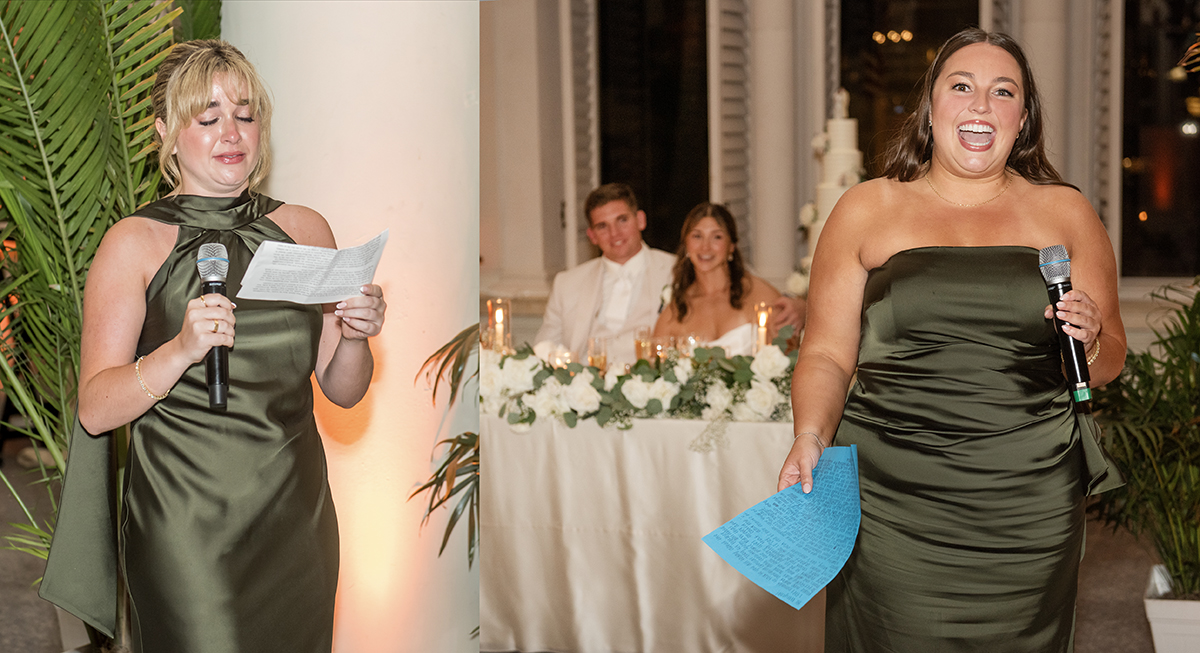
The best wedding toast photographs tell a complete story. As a South Florida Catholic Wedding Photographer, I don’t just photograph the tears—I capture the laughter, the smiles, the nervous anticipation, and the heartfelt emotions that make each speech memorable. Timing is everything. Rather than photographing someone in the middle of speaking with awkward expressions, I wait for natural pauses between sentences when genuine emotion shines through. The result is a collection of photographs that preserves the feeling of the moment while ensuring everyone looks their very best.

Some of the most powerful wedding photographs happen when people forget the camera is there. During an emotional moment at the reception, a guest is comforted by a friend as the celebration continues around them. Genuine moments like this can’t be posed or recreated—they simply have to be noticed and captured.
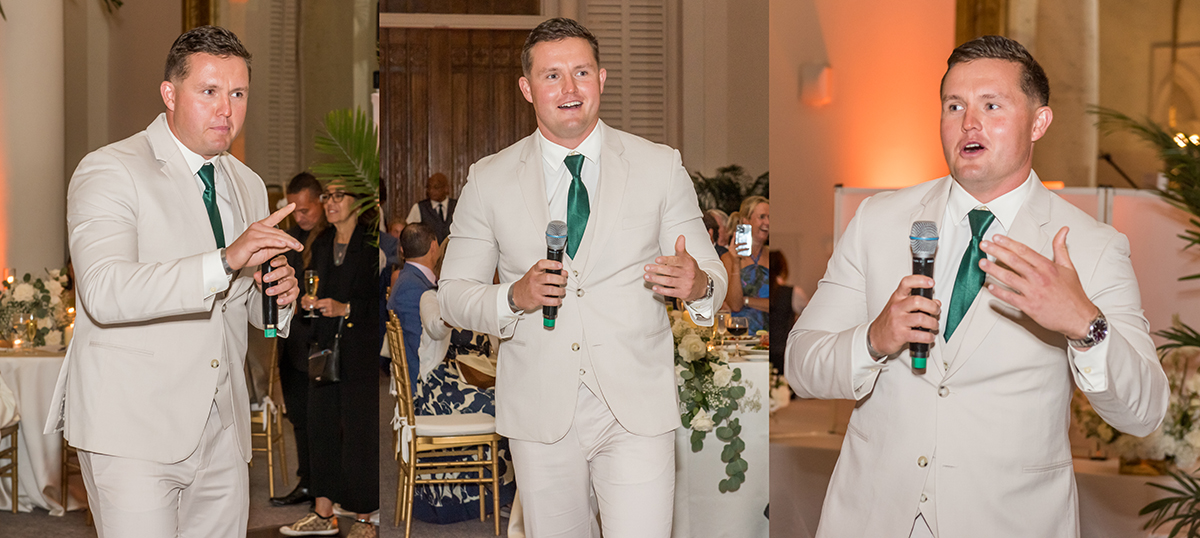
A great best man’s toast is more than a funny speech—it’s a celebration of friendship, memories, and the journey that brought the bride and groom together. As a wedding photographer, I pay close attention to expressions, gestures, and those brief pauses between sentences that reveal genuine emotion. Rather than settling for a single photograph, I capture a variety of expressions throughout the speech, ensuring the final collection tells the complete story—from the heartfelt moments to the laughter that filled the ballroom.
Making Sure Every Guest is part of the Wedding Story
As a South Florida Catholic Wedding Photographer, one of my goals is simple: when the wedding is over, I want every guest to feel like they were part of the story.
Beautiful portraits of the bride and groom are essential, but weddings are really about family and friends coming together to celebrate. That’s why I always look for opportunities to photograph as many guests as possible throughout the day.
When the timeline allows, I often recommend a Photo Blast. Instead of casually walking around the room hoping to catch everyone, we turn it into an event. The DJ announces the Photo Blast, the bride and groom move quickly from table to table, and every group is ready before I arrive. The result is an exciting, high-energy experience that keeps the reception moving while creating photographs nearly every guest can enjoy.
The biggest advantage is efficiency. Rather than spending 45 minutes or more trying to find everyone individually, a well-organized Photo Blast allows us to photograph an entire ballroom in just a few minutes, leaving more time for dancing, toasts, and celebrating.
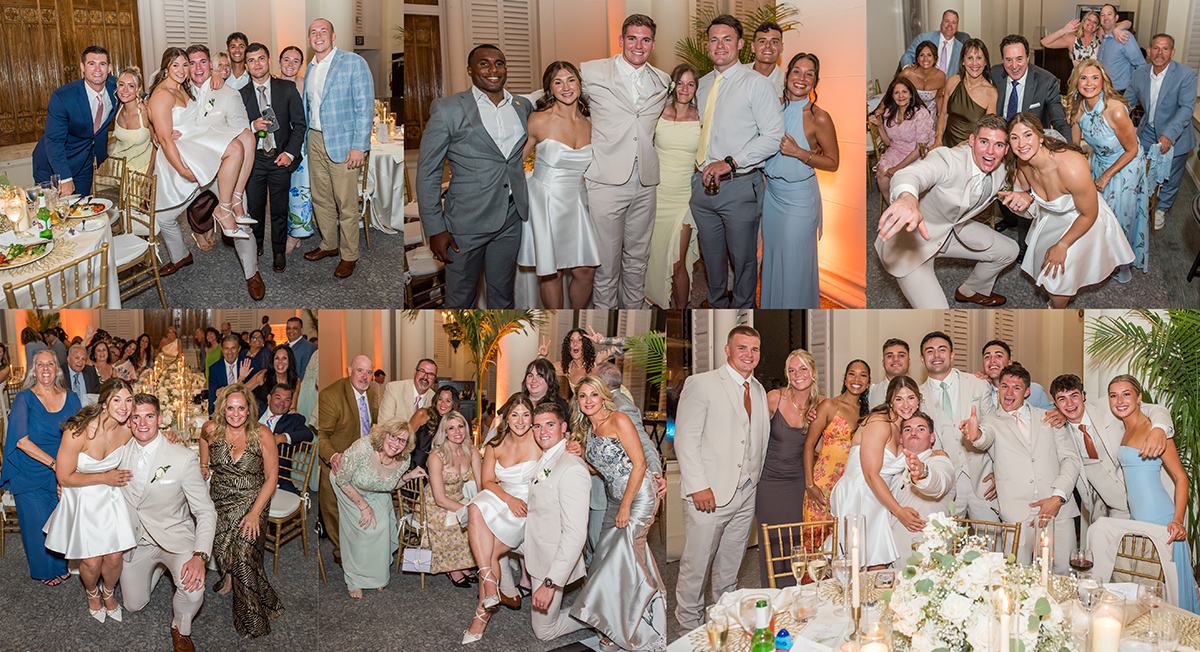
One of my goals at every wedding is to photograph every guest—not just the bride and groom. During Catarina and David’s reception, the DJ announced what we called the “Photo Blast.” As the music played, the bride and groom rushed from table to table while every guest quickly gathered for a fun group photograph. Thanks to good planning, great teamwork, and an energetic crowd, we photographed more than 185 guests in approximately 15 minutes. It was fast, organized, and created a wonderful collection of memories for everyone who attended.
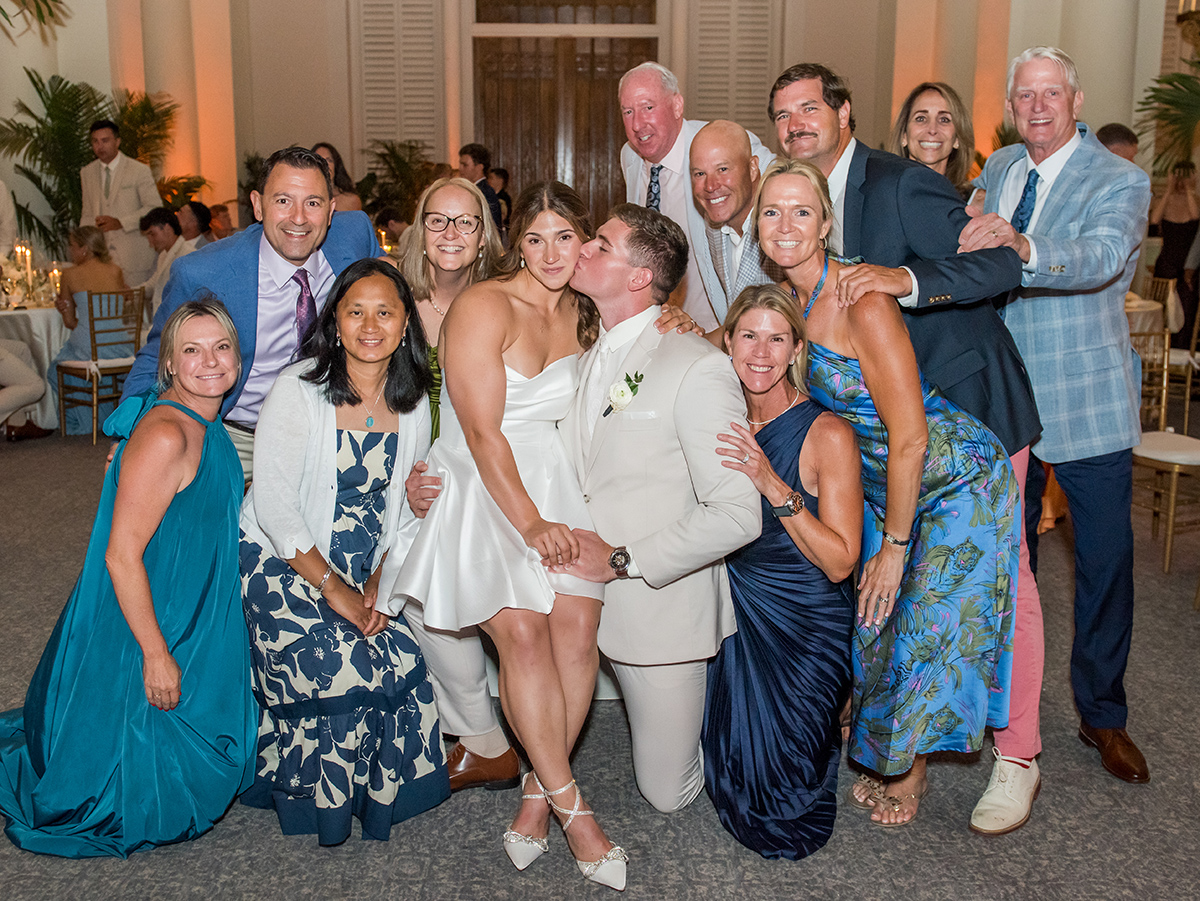
One table. Ten seconds. One quick kiss. That’s the magic of the Photo Blast. With everyone gathered together and the energy running high, we created a fun, natural group portrait in just a few moments before moving on to the next table. It’s one of the fastest and most enjoyable ways to make sure every guest is photographed during the wedding reception.
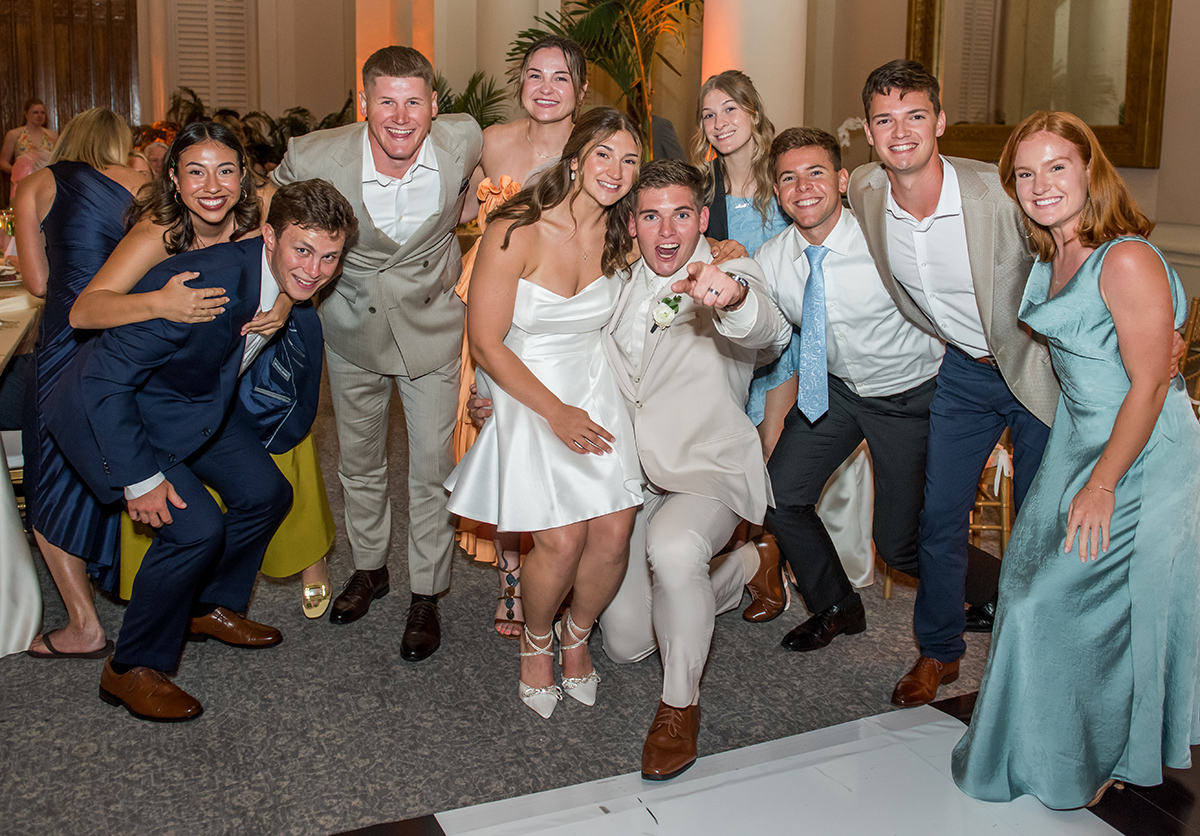
One of my goals at every wedding is to create photographs that people will actually want to frame, share, and remember. During the Photo Blast, each group gets a chance to show off its own personality. Some groups pose traditionally, while others, like this one, bring their own energy and excitement. The result is a collection of authentic, fun-filled photographs that capture the spirit of the celebration and the friendships that made the day so memorable.
Taking Time to Enjoy the Day
One of the smartest decisions we made was not filling every minute of the day with photography.
After returning to The Boca Raton, we still had plenty of time before cocktail hour began. That allowed us to complete family portraits, photograph Catarina and David together, and still leave them with nearly forty-five minutes to themselves before the reception.
I always encourage couples to build a little breathing room into their timeline. Weddings move quickly, and having time to relax, freshen up, enjoy a quiet conversation together, or simply sit down for a few minutes makes a tremendous difference. Instead of feeling like they’re racing from one event to another, couples arrive at their reception refreshed and ready to celebrate with their guests.
Ironically, those well-planned timelines often produce the most natural photographs because everyone feels comfortable instead of rushed.
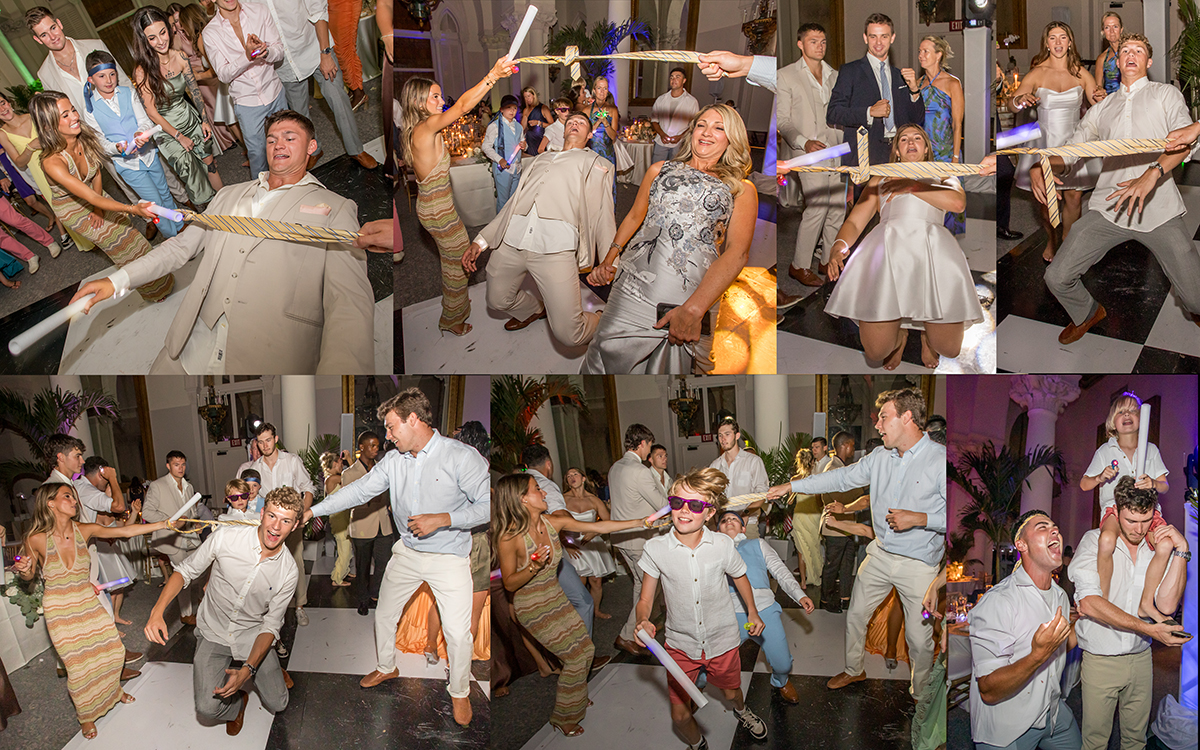
One of the best parts of photographing a wedding reception is never knowing what’s going to happen next. As the dance floor filled with energy, the neckties came off and quickly became limbo bars, turning the reception into a hilarious competition that had everyone laughing. From the bride and groom to family and friends, guests of every age jumped in to join the fun. These are the moments I love to photograph—unscripted, spontaneous, and full of genuine personality. Years from now, these photographs won’t just remind Catarina and David what their reception looked like—they’ll remind them exactly how much fun everyone had celebrating together.
When couples receive their wedding gallery, I want them to discover photographs of friends and family they didn’t even realize I had captured. Those are often the images that become priceless years later.

Every great wedding has a moment when the celebration shifts into another gear, and this was it. As the Hora Loca entertainers burst into the ballroom, the energy exploded. A drummer on stilts, dancers in military-inspired costumes, waving American flags, and dazzling LED Isis wings transformed the reception into a full-scale production. The bride, groom, and their guests were immediately drawn onto the dance floor, creating the kind of high-energy photographs that make a wedding reception unforgettable. It’s moments like these that turn a great party into an incredible experience.
Great Wedding Photography Means Staying with the Action
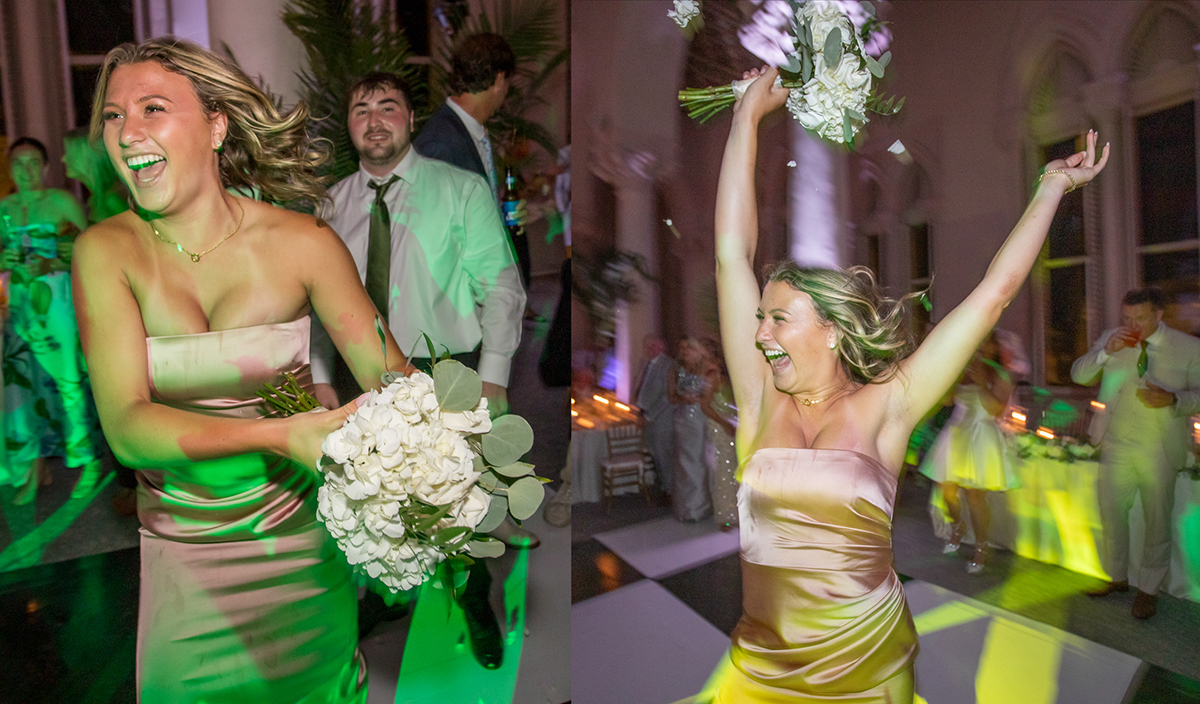
Catching the bouquet is one thing. Catching the reaction is another. I stayed close to the action as the bouquet came down, allowing me to capture not only the catch but the instant celebration that followed. Her expression tells the entire story.
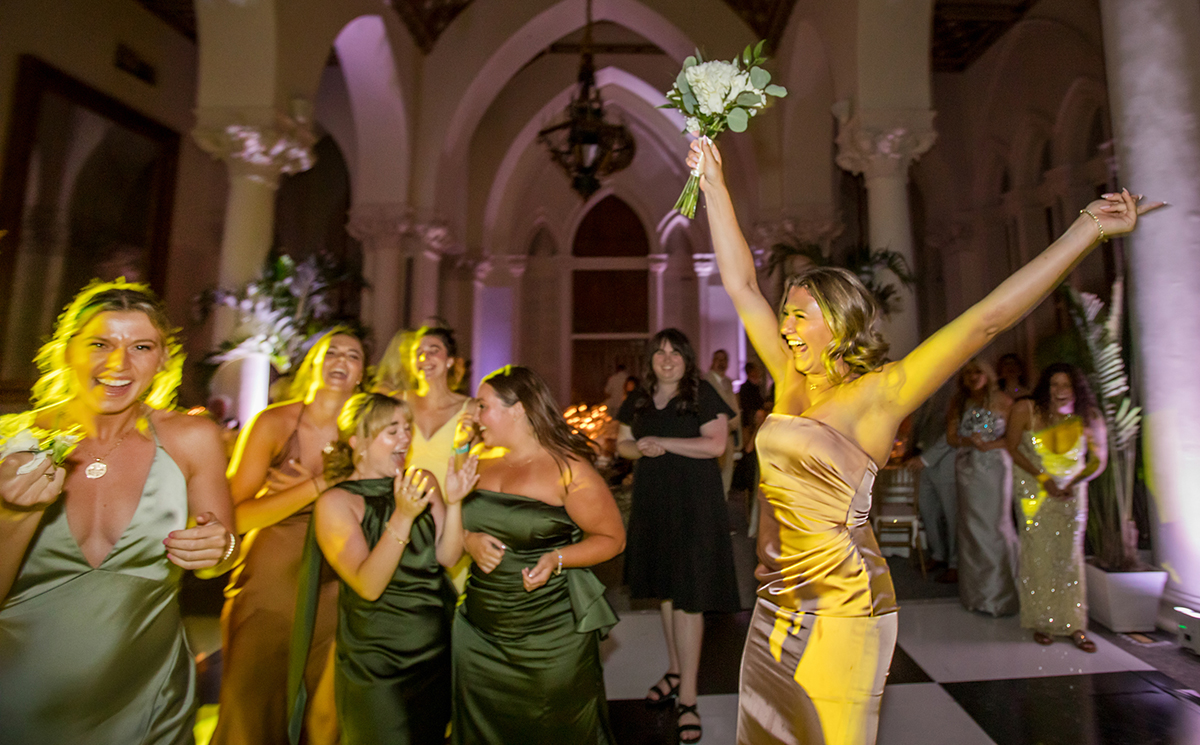
The bouquet had been caught, but the moment wasn’t over. I stayed with the action as the bridesmaid raised the bouquet over her head and celebrated her victory while everyone around her reacted. Sometimes the photograph immediately after the expected moment is the one that tells the story best.
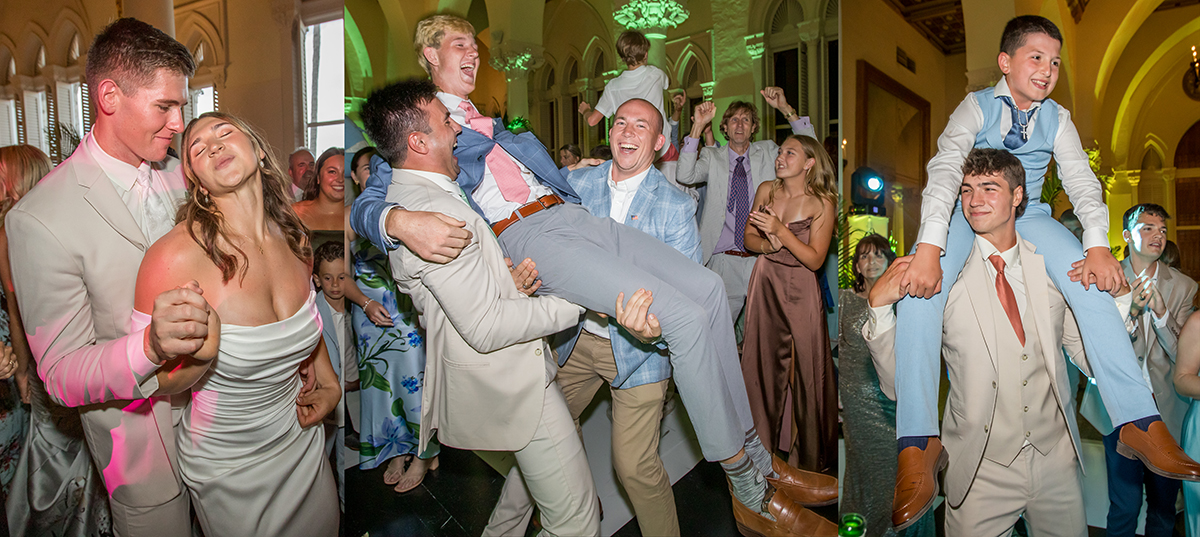
Once the dance floor opens, I don’t photograph the party from across the room—I get right into the middle of it. That’s where the expressions, laughter, movement, and unexpected moments happen. From Catarina and David dancing together to friends being lifted into the air and younger guests joining the celebration, being close to the action allows me to create photographs that actually feel like the party felt.
From the quiet moments of getting ready to the traditions of their Catholic ceremony and the energy of an unforgettable reception, Catarina and David’s wedding was filled with the kind of moments that make wedding photography so meaningful.
And what better way to end the story than with wedding cake?

Catarina and David cut their elegant wedding cake together before sharing the traditional first bite as husband and wife. Their smiles, laughter, and playful reactions made this the perfect way to close the story of their beautiful South Florida wedding.
After cutting their beautiful cake together, Catarina and David quickly discovered that feeding each other a bite can be just as entertaining as cutting it. Their expressions say everything—and provide the perfect final photographs from a day filled with love, family, emotion, and plenty of laughter.
If you’re planning a wedding in South Florida and looking for a photographer who will capture more than just the expected photographs, I’d love to hear about your plans. My goal is to tell the complete story of your wedding day—from the moments everyone sees to the little moments you may not even know happened.
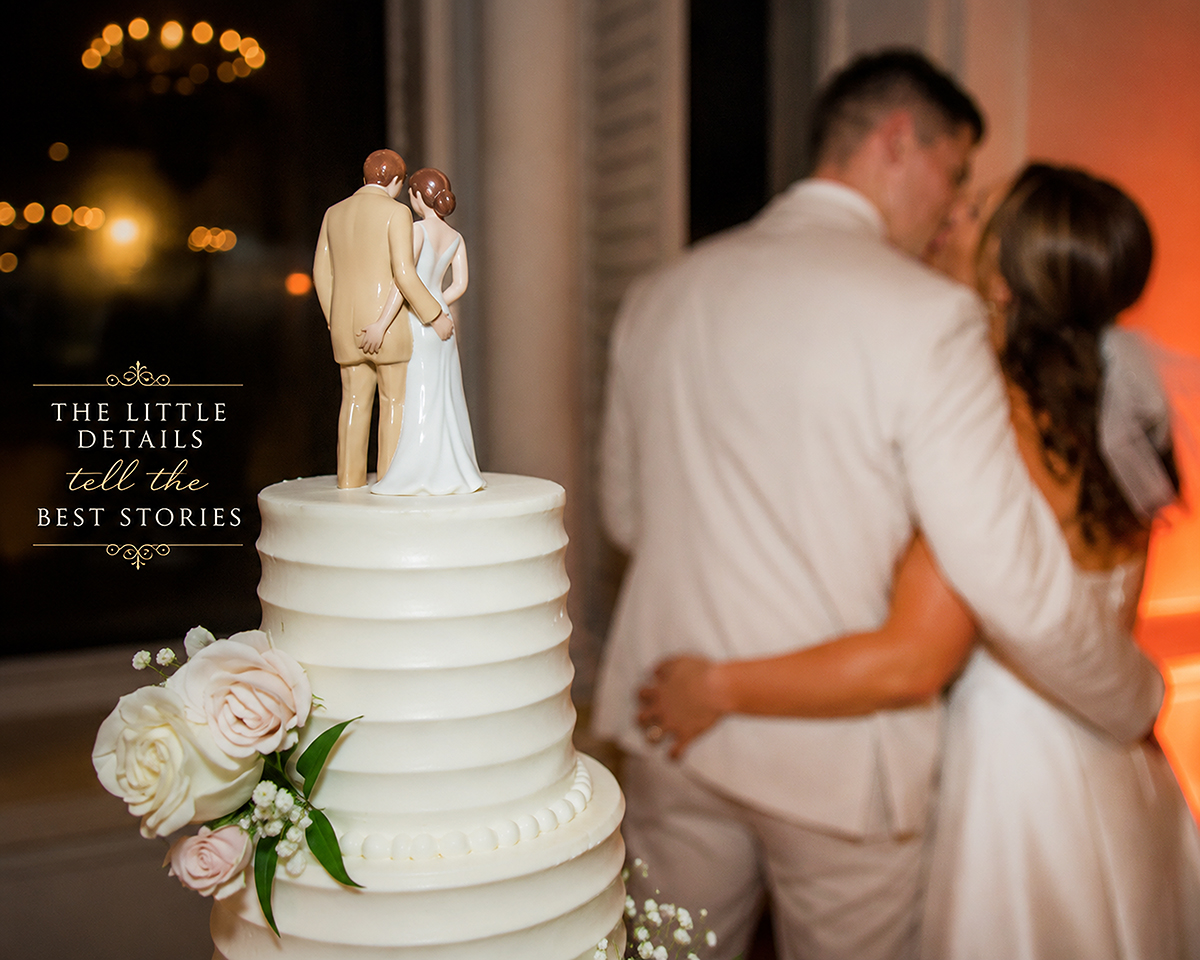
Sometimes the smallest wedding details tell the biggest story. Catarina and David chose a playful cake topper with the porcelain bride giving her groom a little grab from behind. With the real bride and groom sharing a kiss in the background, this photograph brings their sense of humor and personality into one perfect moment.
Ready to Say Yes to Beautiful Wedding Photography?
Say Yes by Jeff
Jeff Kolodny
954-560-1533
Contact me today to check availability for your wedding date and let’s start planning photography that tells your story.
View comments
+ Leave a comment